Top 10 Money-Saving Tips for Shopping at Liquidation Stores
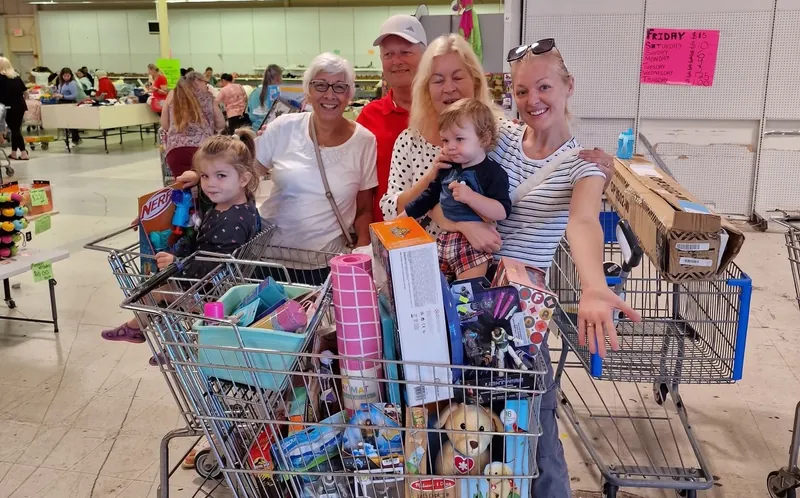
Most people think shopping at a liquidation store is a last resort. It is actually one of the smartest financial moves you can make in 2024. Bin stores, bargain bin shops, and Amazon return stores have gone from niche side-hustle secrets to genuinely mainstream budget strategies, and the shoppers who understand how these places actually work are walking out with brand-name goods at a fraction of what you would pay at Target or Walmart. We are talking 50 to 80 percent off retail, regularly, not just during a seasonal sale.

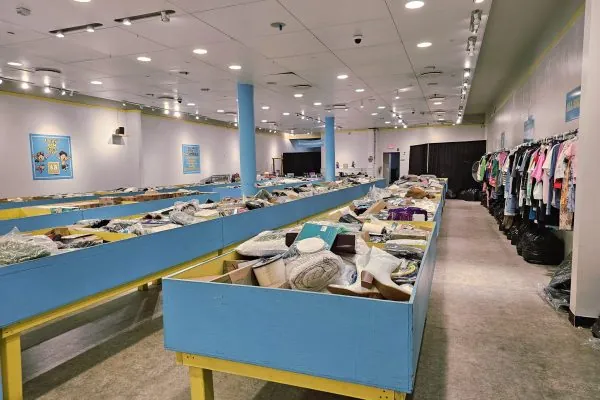
So what exactly is a bin store? It is a retail outlet, sometimes called a bin outlet or bin warehouse, that sells overstock merchandise, customer returns, shelf pulls, and pallet liquidation items directly to the public. Inventory comes from major retailers and Amazon, gets sorted (sometimes loosely), and gets dropped into large bins on the sales floor. Prices are often set by the day of the week, not by the item. That means a Bluetooth speaker sitting in a bin on Monday at $8 might be sitting there on Saturday for $1. This guide covers the 10 most practical tips to help you shop smarter at these stores, spend less, and sometimes even turn a profit flipping what you find.
Bin Store Pal is a directory built specifically to help people find local bin shops, overstock stores, and return pallet stores in their area. Cities like Deer River, MN and Oklahoma City already have verified listings. Use the directory before you make the drive.
How Bin Stores and Liquidation Outlets Price Their Inventory

Before you can save money at a liquidation store, you need to understand what you are walking into. These are not regular discount stores with stable shelf prices. Inventory rotates fast, condition varies wildly, and the pricing system runs on a schedule most first-timers do not know about.
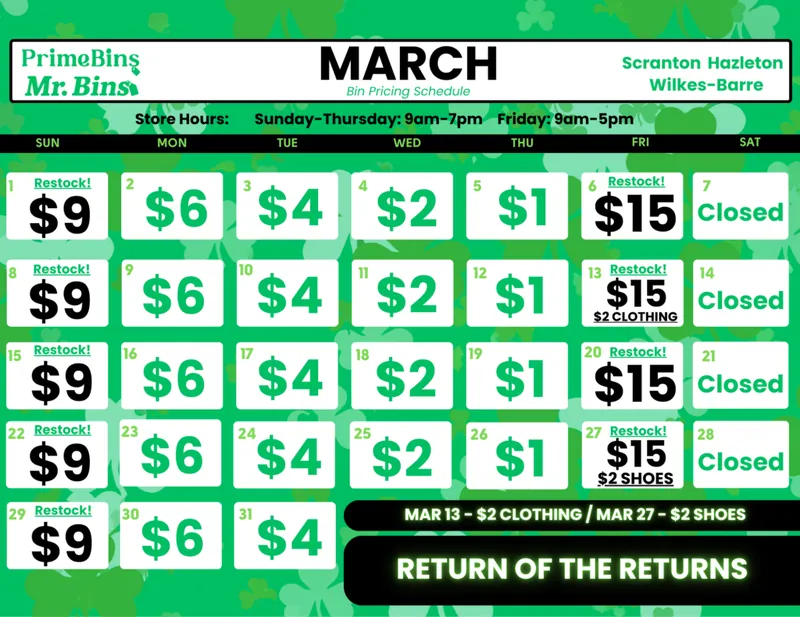
Most bin outlets restock on a weekly or bi-weekly cycle. Items are priced highest on restock day, then drop incrementally until they either sell or get cleared out. A typical pricing ladder looks like this: Monday items start at $8, drop to $5 by Wednesday, and hit $1 to $2 by the weekend. Some stores use color-coded tags to mark what day an item entered the rotation. Once you know what color means what day, you can glance at a tag and immediately know how much longer before that item bottoms out in price.
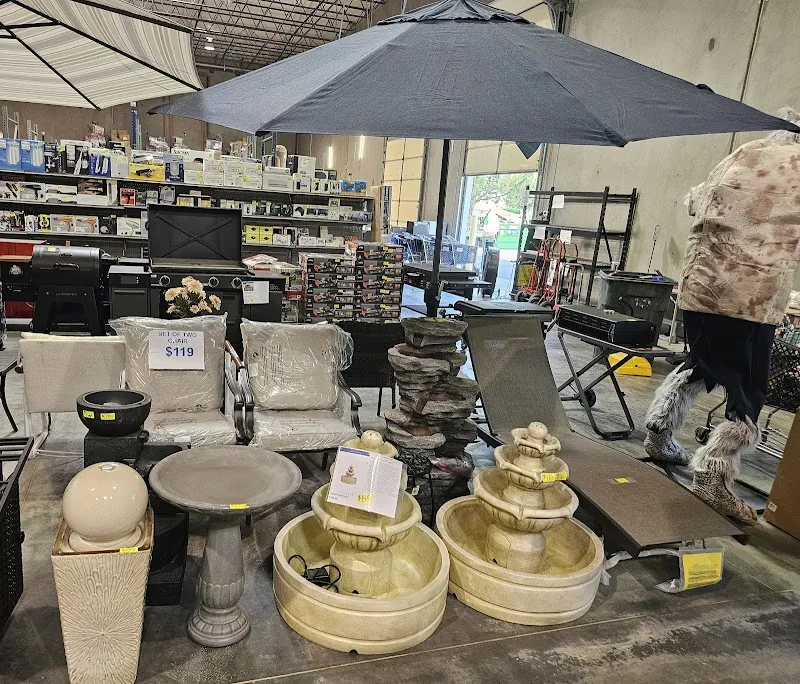
Inventory in these places comes from a mix of sources: Amazon returns, retailer overstock, shelf pulls from big-box stores, and pallet liquidation auctions. This mix is why you might pull a factory-sealed kitchen gadget out of a bin right next to a phone case with a cracked screen. Condition is not guaranteed. That is the deal. You get lower prices because you are accepting some uncertainty about what you are buying.
At a standard bin store, a $50 retail item might sit in a bin priced at $8 on Monday and $2 on Friday. If you know what the item is worth and it still functions, that Friday price is genuinely hard to beat anywhere else.
Here is a basic cost comparison so the math is obvious:
| Item | Retail Price | Bin Store Monday | Bin Store Friday | Savings (Friday) |
|---|---|---|---|---|
| Bluetooth Speaker | $45 | $8 | $2 | 96% |
| Air Fryer (open box) | $80 | $8 | $2 | 97% |
| Kids' Toy | $25 | $5 | $1 | 96% |
| Phone Charging Cable | $15 | $5 | $1 | 93% |
| Skincare Product (sealed) | $30 | $8 | $2 | 93% |
Those numbers are not exaggerated. They reflect what actually happens at places like Bargain Bin in Deer River, MN, which holds a 5.0-star rating with reviewers who clearly went back more than once.
Tip 1: Know Your Store's Restock Day Before You Go
This is the single most important thing. Knowing when a bin shop restocks changes everything about how you shop there. Show up the day after restock and you are picking through already-sorted inventory at higher prices. Show up on restock day and you have first access to everything new, sealed, and untouched.
Call ahead. Seriously, just call. Most stores will tell you their restock schedule over the phone, or they post it on Facebook or Instagram. This takes three minutes and saves you from wasting a trip. If they have social media, they often post restock day photos, which gives you a preview of what kind of inventory just landed.
But here is the flip side: if you're not hunting for a specific item and you just want the cheapest possible price per item, go late in the week. End-of-week clearance at a bin outlet can get you usable goods for $1 each. A $20 budget on a Saturday can fill a grocery bag. The tradeoff is selection, not quality necessarily, just fewer choices. You work around what is left.
Use the Bin Store Pal directory to find verified locations in your area. If you are near Deer River or Oklahoma City, there are already listed locations to check. More cities are being added regularly.
Tip 2: Set a Hard Budget Before You Walk In
Bin stores are designed, intentionally or not, to make you feel like everything is cheap enough to just throw in your cart. And technically it is cheap. But $3 here and $5 there adds up to $60 before you have thought about it, and half the stuff gets shoved in a closet.
Decide on a spending cap before you walk through the door. Write it down on your phone. Bring cash if you can, because handing over physical bills makes the limit feel real in a way that swiping a card does not. A $40 cash limit is a $40 cash limit. There is no ambiguity.
Split your budget into two buckets mentally. One bucket is for things you actually need or will use this week. Other bucket is for items you might flip or resell. This keeps impulse buys from crowding out the practical stuff. If you are shopping at an amazon return store with flipping in mind, you need that second bucket to stay disciplined about what is actually worth buying at a $5 price point versus what just looks interesting.
- Set a firm dollar cap (write it down)
- Bring cash if possible
- Split mentally: personal use vs. resale
- Leave the credit card in the glove box if impulse spending is a problem
Tip 3: Download a Price-Checking App Before Your Visit
This one gets skipped constantly and it is a mistake. Walking into a liquidation store without a way to check retail values is like buying a used car without looking up the book value first. You need a reference point.
Amazon's app has a built-in barcode scanner. eBay's app does too. Google Shopping works for most branded items. Pull out your phone when you find something interesting, scan the barcode, and see what it actually sells for. A $5 bin item with a $40 retail value is an 87% discount. A $5 bin item that retails for $6.99 is basically nothing. You cannot make that call without checking.
Okay, one more thing on this: check completed eBay listings, not just active ones. Active listings show what people are asking. Completed listings show what people actually paid. That difference matters a lot if you are buying to resell.
Price-checking also protects you from the condition problem. If a blender retails at $60 but the lid is cracked, it is not worth $8. It might be worth $2 if you can replace the lid for a few dollars, or nothing if the part is discontinued. Knowing the retail price gives you the anchor to judge whether the bin price makes sense given the condition you are looking at.
Tip 4: Inspect Everything Before It Goes in Your Cart
Inventory at a return pallet store or bin warehouse is not curated. Nobody tested it. Some of it is perfect. Some of it is broken. Some is in the weird middle ground of "works but missing a part."
Check every item physically before you take it. Look for cracked screens, missing components, water damage indicators (those little white or red dots inside electronics), broken zippers, torn packaging where tampering is obvious, and any smell that suggests moisture damage. This sounds obvious but people get excited and skip it.
Electronics are the big one. A sealed box does not mean a working product at an overstock store. Amazon returns often get reboxed before being sent to liquidation. The box might look fine and the product inside might have been returned because it was broken. Always assume you cannot return it, because most bin shops do not accept returns. What you buy is what you own.
Clothing and shoes, on the other hand, are usually lower risk. Overstock apparel is often brand new with tags, never worn, just surplus from a retailer who over-ordered. Those finds can be genuinely excellent.
Tip 5: Learn What Sells and What Doesn't
Not every cheap item is a good buy. This sounds obvious but I have watched people load up carts at a bin outlet with stuff that is cheap because nobody wants it, not because it is a hidden gem.
Categories that tend to be great finds at bin stores: small kitchen appliances, brand-name cables and chargers, toys (especially holiday season inventory dumps), skincare and beauty products (sealed), books, and seasonal decor. Categories that are trickier: large electronics with no way to test them, anything requiring proprietary parts, furniture pieces with visible damage, and opened food items (which you should generally skip entirely from a safety standpoint, by the way).
Resellers who do well at these stores have a mental list of 10 to 15 categories they know cold. They do not try to evaluate everything. They walk past the stuff they do not know and focus on what they can assess fast and accurately. That focus is worth building even if you are just shopping for personal use.
Tip 6: Go With a List, Not Just a Vibe
Walking into a bin shop without any idea what you want is how you spend $60 on things you did not need. Going in with even a loose list of things you are actually looking for changes your whole experience.
Before you visit, spend five minutes writing down items you legitimately need or want in the next month. Household supplies. A specific type of kitchen tool. A birthday gift for someone. When you spot something on your list at a 90% discount, that is a real win. When you grab something random because it seems cheap, that is often just clutter with a receipt.
Lists also help you move faster through a busy store. Bin shops can be chaotic, especially on restock day. Knowing what you are hunting for keeps you focused and out of the way of other shoppers who are doing the same frantic scan through the bins.
Tip 7: Visit Multiple Times to Learn the Inventory Patterns
One visit does not tell you much. Two or three visits to the same store teaches you a lot. You start to recognize what types of merchandise that specific liquidation store tends to carry. Some bin outlets get a lot of Amazon electronics returns. Others are heavy on household goods and toys. Some get consistent clothing drops from specific retail chains.
Once you know a store's patterns, you can predict when to show up and what to look for. That Bargain Bin in Deer River with the perfect 5.0-star rating did not get that rating from one-time visitors. Regular shoppers who understood the place well enough to get consistent value are behind scores like that.
And honestly, there is something weirdly enjoyable about becoming a regular at one of these places. You start to know the layout, you know the staff, you figure out which bin is usually the electronics bin versus the household stuff bin. Some stores do not even label them. You just learn by showing up.
- Visit at least 3 times before judging a store's quality
- Note which product categories appear most consistently
- Track which day of the week you find the best condition items
- Ask staff what pallets are coming next week (some will tell you)
Tip 8: Pair Bin Store Trips With Other Budget Shopping Strategies
Bin stores work best as one piece of a broader discount shopping approach, not as your only strategy. Stacking methods is where the real savings compound.
For non-perishable household goods, bin stores are hard to beat. For groceries and food staples, you need a different type of outlet. Salvage grocery options in your area can do for your food budget what bin stores do for household goods, offering steep discounts on near-date or overstock food products. Running both of these as regular shopping habits together can put a serious dent in your monthly expenses.
Also consider timing your bin store visits around known pallet liquidation schedules. If a store restocks every Monday and you know they tend to get heavy electronics inventory in the fall (back-to-school returns, holiday surplus), that is a calendar event worth planning around.
Tip 9: Understand the No-Return Reality and Shop Accordingly
Most bin outlets and liquidation stores do not take returns. Full stop. Whatever you put in that cart is yours when you walk out the door. This is not a complaint, it is just the deal, and understanding it shapes how you should approach every single item you consider buying.
Only buy electronics you can test in the store, or that you are willing to lose the purchase price on entirely. Most bin shops have a power strip or testing station somewhere in the store. Ask if you do not see one. Some will let you plug something in before you buy. If a store does not allow testing and you are looking at a $8 item you cannot verify works, weigh that realistically against the risk.
For non-electronic items, the no-return policy matters less. A sealed bottle of shampoo at a bin store is the same sealed bottle of shampoo it would be anywhere else. But a power tool with no way to test it is a gamble, and you need to decide if the bin price makes that gamble worth it.
Tip 10: Use a Directory to Find the Best Bin Stores Near You
Not all bin stores are equal. Some are well-organized, restocked on a reliable schedule, staffed by people who can answer questions, and located in areas where you can actually find decent inventory. Others are, frankly, just a mess with a collection of junk that has been sitting there for weeks.
Reading reviews before you drive somewhere is obvious advice but people skip it anyway. Bin Store Pal lists verified locations including Bargain Bin in Deer River, MN (5.0 stars) and a location in Oklahoma City. Those ratings come from real shoppers who went, spent money, and came back to report. A 5.0 rating at a place like this means people found real value, not just cheap prices.
And while you are mapping out your discount shopping strategy, it is worth knowing that the same research-first approach applies to finding salvage grocery stores too. Look for reviewed, verified locations rather than just showing up somewhere random because it showed up in a Google search.
Using a directory built specifically for bin shops and overstock stores saves you from wasted trips. Search by city, read what other shoppers said, and show up with a plan. That combination of preparation and local knowledge is what separates shoppers who consistently save money at these places from shoppers who go once, feel overwhelmed, and never go back.
- Check Bin Store Pal for verified locations near you
- Call ahead to confirm restock day and pricing schedule
- Set a firm cash budget before walking in
- Download Amazon, eBay, or Google Shopping for barcode scanning
- Bring your list of items you actually need
- Check for a testing station when evaluating electronics
- Plan to visit the same store at least 2-3 times before writing it off
A Few Final Thoughts
Shopping at a bin store rewards preparation more than luck. Yes, you will occasionally stumble across something amazing by pure chance. But the shoppers who consistently walk out with great deals are the ones who showed up knowing the pricing cycle, carrying a budget, with a price-checking app open and a rough list of what they were after.
Start small. Pick one local bin outlet or liquidation store, visit it twice in the same week on different days, and observe how pricing and selection change. That one experiment will teach you more than any guide can. Then scale up from there once you have a feel for how these places work.
Bargain Bin in Deer River is a real example of what a well-run bin shop looks like when shoppers trust it. That 5.0-star average is not an accident. Find your local