How to Shop Amazon Return Stores Like a Pro (And Actually Save Money)
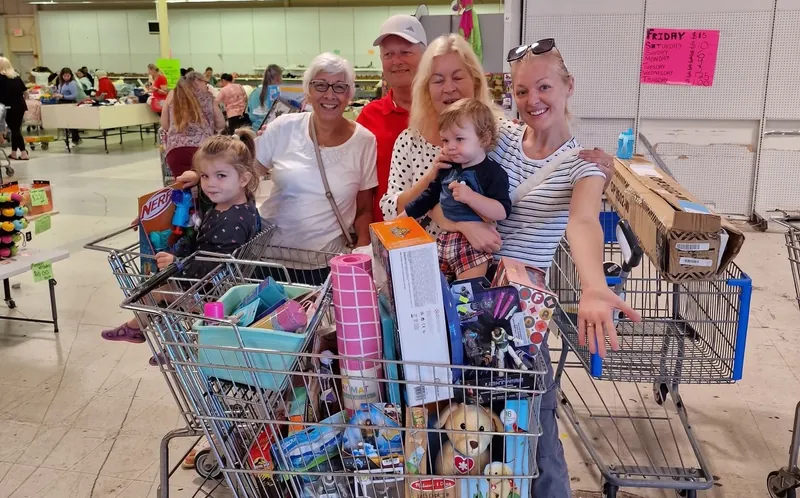
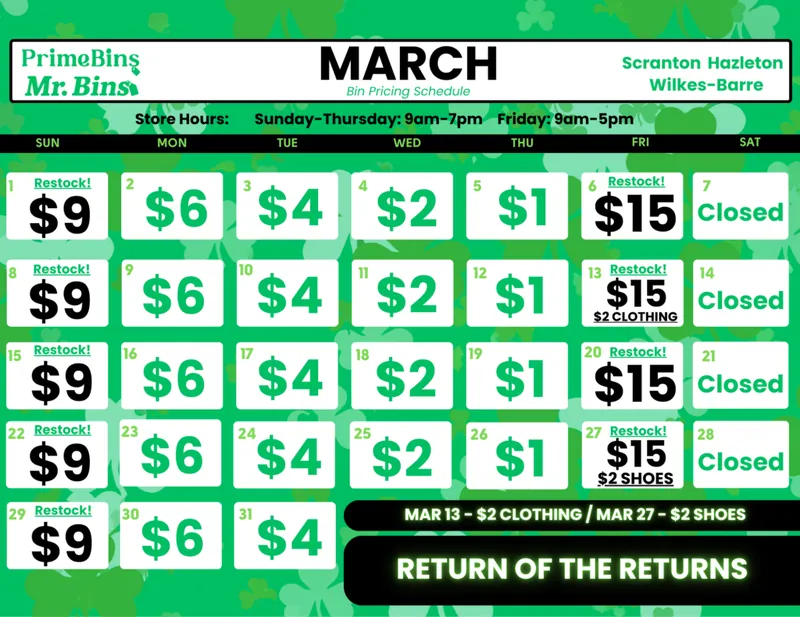
Picture this: someone walks into a bin store for the first time on a Monday, sees a price tag that says $7 per item, thinks that sounds too expensive for a box of mystery stuff, and leaves. They come back Thursday when everything's $2, grab a cart full of random bins, and walk out with a KitchenAid hand mixer still in the box, three unopened Bluetooth speakers, and a pile of kids' clothes with tags still on. Total spent: under $30. That is not luck. That is timing, and it is the first thing you need to understand about how these places actually work.
Amazon return stores, also called bin stores, bin outlets, liquidation stores, and overstock stores, have exploded over the last few years as online shopping returns reached staggering volumes. Amazon alone processes hundreds of millions of returns annually, and a huge portion of that merchandise gets bundled into return pallets and sold in bulk to small retailers who set up shop in strip malls and warehouses across the country. Bin Store Pal currently lists 1,252 of these businesses across the United States, and that number keeps growing. If you've never been to one, this guide will get you ready. If you have been but left empty-handed or overpaid, keep reading.
1. Understand the Pricing Cycle Before You Even Walk In
Most bin shops run on a rotating weekly price schedule. Monday is the most expensive day, often $7 or $8 per item, because the bins are freshly stocked with new inventory from return pallets. Each day after that, the price drops, sometimes hitting $1 or $2 by Thursday or Friday. Then the whole cycle resets. Knowing this before you go is honestly more valuable than any other tip in this guide.
Here is what most new shoppers get wrong: they assume cheaper days are always better. They're not, necessarily. Early in the week, you get first pick of fresh inventory, which means better odds of finding something unopened, something complete, something actually worth buying. By Thursday, you might pay $1 per item but spend two hours digging through broken picture frames, single shoes, and electronics missing their charging cables. Both strategies work, but they work differently depending on what you're hunting for. Resellers who flip items for profit almost always go on day one or day two. Casual shoppers looking for cheap household stuff or clothes often prefer mid-week. Figure out which one you are before you plan your trip.
Call the store or check their social media before your first visit. Ask specifically: "What day do you restock?" Many stores post their schedule on Facebook or Instagram. Knowing where you are in the weekly cycle is step one, full stop.
Some stores do not follow a strict daily drop. A few pallet liquidation outlets price by the week or by the bin rather than the item, which is a completely different math problem. One store I read reviews for charges $15 per bag and lets you stuff it as full as you can get it. That's a great deal if you're buying clothes. Less great if you're hoping to grab a single air fryer. Always verify the pricing model, not just the schedule.
2. Find a Store Worth Visiting (Not Just the Closest One)

Distance matters less than quality when it comes to amazon return stores. A poorly run store with stale inventory and inconsistent pricing is a waste of an afternoon no matter how close it is. Start with Bin Store Pal's directory, which lists 1,252 businesses across the country, searchable by city or ZIP code. Each listing includes hours, contact info, and customer reviews. Spend five minutes reading those reviews before you go anywhere.
Pay attention to what reviewers say specifically. Comments about "great finds this week" or "staff actually helped me figure out the pricing" tell you something real. Vague five-star reviews that just say "love this place!" tell you less. Look for patterns: if three different reviewers in the last month mention the bins feeling picked over or the prices not dropping like advertised, believe them.
The stores with the most verified reviews and perfect ratings on our directory right now include The Other Side Thrift Boutique in Millcreek, UT, which sits at 5.0 stars across 5,092 reviews. That's not a fluke. Deals Outlet Bin Store has locations in both Tallahassee, FL and Gainesville, GA, each holding 5.0 stars with 1,565 and 662 reviews respectively. Bin Fest in Deerfield Beach, FL rounds out the top tier at 5.0 stars with 382 reviews. These are places worth driving to if you're in the area.
If you are in a major metro, you've got options. Las Vegas leads the country with 22 bin store listings, which is wild when you think about it for a second, given that the city already runs on the psychology of "you might find something amazing if you just keep looking." New York has 17 listings, Phoenix has 14, Colorado Springs has 13, and Honolulu rounds out the top five with 12. More competition between stores in the same city tends to mean better inventory and fairer pricing across the board.
- Is the pricing schedule posted clearly, either online or in-store?
- Are recent reviews (within 60 days) positive about inventory quality?
- Does the store have a clear return or exchange policy on damaged items?
- Are bins organized in any way, or is it total chaos? (Chaos isn't always bad, but factor in your time.)
- Is the store clean? Smells matter. A bin warehouse that reeks of mildew is a sign of poorly stored inventory.
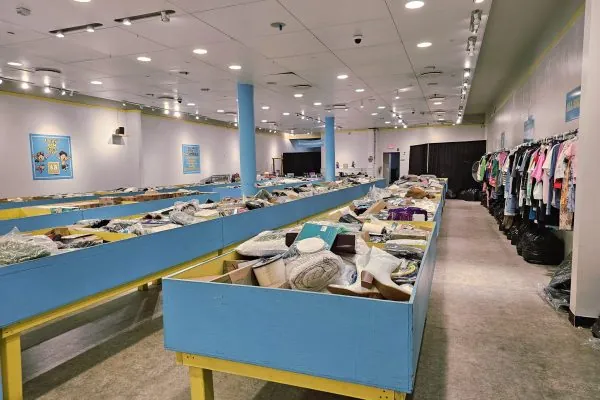
Speaking of smells, walking into a good bin outlet should feel a little like a controlled treasure hunt. Concrete floors, rows of large open bins, maybe some folding tables near the back for electronics or higher-value items. Good stores keep things organized enough that you can actually move through the aisles without knocking over a stranger. Bad ones feel more like a yard sale that lost a fight with a delivery truck.
3. Know What You're Actually Looking At (Condition Assessment 101)
Every item in a return pallet store arrived there because someone sent it back to Amazon or a major retailer. That covers a huge range of situations. Some items come back because the customer changed their mind and never opened the box. Some come back because they're broken. Some come back because the wrong size was delivered. And some, honestly, come back for reasons nobody documented.
Your job as a shopper is to assess condition quickly and accurately. Here is a rough mental framework:
- Sealed box, no damage: Best case. Buy it if the price makes sense.
- Open box, all parts appear present: Good. Check for obvious damage, test batteries if possible.
- Open box, clearly missing components: Risky. Only worth it if you already own the missing parts or can get them cheap.
- Visibly damaged or wet: Usually skip it. Water damage on electronics is not fixable with hope.
- Clothing with tags: Almost always worth it at bin store prices. Tags mean it was returned unworn.
- Clothing without tags: Check for stains and smells. Some are great, some are not.
Electronics deserve their own paragraph. I would be more cautious with electronics at a bargain bin store than with almost anything else. A $3 Bluetooth speaker that works is an incredible deal. A $3 Bluetooth speaker that doesn't power on is three dollars in the trash. If the store allows testing (many have a small testing area or a power strip you can use), always test before you buy. If they don't, factor in the risk. Some experienced shoppers set a personal rule: never pay more than $5 for untested electronics at a bin outlet, no matter what the retail price was.
Toys and kitchen items are often the sweet spot at these stores. They're durable, they're easy to evaluate visually, and they show up on return pallets constantly because of gift returns and holiday overstock. A $4 silicone baking set still in the packaging is not an unusual find.
Bring a phone charger cable or a small power bank with you. Being able to plug in a device before buying it has saved countless shoppers from taking home dead electronics. Also, download a barcode scanner app. Scanning an item's UPC gives you the retail price instantly, so you know exactly how good your deal actually is.
4. Go In With a Strategy, Not Just Enthusiasm
Enthusiasm is great. But walking into a pallet liquidation store with no plan is how you end up spending $40 on a pile of random things you don't need and leaving the one genuinely useful item behind because you didn't notice it under a pile of foam pool noodles.
Before you go, write down three to five categories of things you could actually use. Not a wish list, a use list. Cleaning supplies. Kids' books. Kitchen gadgets. Pet stuff. Phone accessories. When you're digging through bins, having those categories in mind keeps you focused and stops impulse grabs from eating your budget.
Also, bring cash. Some bin shops are cash-only, and even ones that take cards sometimes have minimum purchase requirements for card transactions. Knowing this in advance saves an awkward moment at checkout. And bring bags. Many stores don't provide them.
And honestly, manage your time. A well-stocked amazon return store on a busy restock day can hold you for two hours if you let it. Some people love that. Others come in, hit their target categories, and leave in 30 minutes with exactly what they came for. Both are valid approaches, but knowing which one you are before you walk in makes the whole trip more productive.
Budget discipline is easy to lose in these places. This is a real thing. Everything feels cheap, so it feels like you can't really go wrong, but $3 times 25 items is still $75. Set a cash budget and physically leave your cards in the car if you need to.
- Check the store's pricing day and plan accordingly
- Write down your target categories (3-5 max)
- Bring cash, reusable bags, and a phone charger cable
- Download a barcode scanner app before you go
- Set a hard budget and stick to it
- Read recent reviews for inventory freshness updates
5. Think Beyond Just Shopping for Yourself
A lot of people who discover bin stores and bin outlets start out shopping for personal use and then realize pretty quickly that there's a resale angle here that can actually pay off. Buying a $5 item you can sell for $40 online is a real thing that real people do on a weekly basis. It takes practice, and you'll make some bad calls early on, but if you're willing to learn retail pricing for the categories you care about, reselling from liquidation stores is a legitimate side income for thousands of people.
Even if reselling isn't your thing, consider shopping for others. Bin store finds make surprisingly good gifts when you find the right items. Holiday shopping at a bin outlet, especially early in the cycle when inventory is fresh, can cut your gift budget dramatically. Unopened candle sets, board games still shrink-wrapped, kitchenware in original packaging: these all show up regularly.
And if you're someone who already loves hunting for deals across different types of discount stores, it's worth knowing that the same bargain-hunting mindset applies in other formats too. Shoppers who love overstock stores often find similar savings on food and pantry staples at salvage grocery outlets near them, where overstock and near-date food products sell at steep discounts. Different product category, same basic principle.
6. Protect Yourself from Common Mistakes
No guide about bin shopping is complete without a reality check section.
Most overstock stores and bin outlets have a strict no-return policy. You bought it, you own it. This is not negotiable at most locations, and fighting about it at the register is not going to change the policy. Accept this before you buy anything. If you're not sure about an item, leave it.
Watch out for items that look complete but aren't. A box for a 12-piece knife set might only have 8 knives inside. A puzzle might be missing pieces. Sellers at pallet liquidation stores are not responsible for verifying contents, and in most cases they genuinely don't know what's in each box. Open boxes when you can before committing to buy.
Be careful about buying electronics with obvious water damage stickers triggered. Many modern electronics have small internal stickers that change color if the device got wet. If you can open the battery compartment on something, check it. A red or pink sticker means water damage, and water-damaged electronics are almost never worth buying at any price.
Finally, don't underestimate the social dynamics of a busy bin store on restock day. Some of these places get genuinely crowded, with regulars who know exactly what they're doing and move fast. You can absolutely hold your own, but going for the first time on the busiest day of the week is a lot. If you're new, consider going mid-week or early in the morning when it's quieter, just to get a feel for how the store is laid out and how the pricing works before you're shoulder-to-shoulder with experienced resellers.
Treat your first visit to any new bin shop as a reconnaissance trip. Walk the whole store before you grab anything. Note the pricing, the bin layout, the categories, and the crowd level. You'll shop smarter on your second visit because you already know where things tend to end up.
7. Build Your Regular Rotation
Once you find a store that works for you, the real savings come from consistency. Regulars at a good bin store learn the staff, learn the restock schedule, and know which sections tend to have the best finds for their specific interests. Some stores even give small perks to loyal customers, like early entry on restock days or heads-up texts when interesting pallets come in. That kind of relationship takes a few visits to build, but it's worth it.
Keep notes on what you find and what you pass on. After a few months, you'll have a real sense of what categories show up reliably at your local store versus what's rare. That knowledge is genuinely useful, especially if you're shopping to resell.
Also worth knowing: the bin store market in some cities is competitive enough that stores actively try to differentiate themselves. Las Vegas, with 22 listed stores, is a good example. Stores there know they're competing for the same shoppers, so some specialize in electronics heavy pallets, others lean into clothing and accessories, and a few focus on home goods. Finding the store that matches your interests is a real thing in dense markets. Our directory listings include enough detail to compare stores before you commit to the drive.
Stores like The Other Side Thrift Boutique in Millcreek, UT and Bin Fest in Deerfield Beach, FL didn't build thousands of five-star reviews by accident. They built loyal customer bases by being consistent, by stocking good inventory, and by running fair pricing schedules. That's what you're looking for in a home store.
FAQ: What exactly is a bin store, and is it the same as a liquidation store?
Yes, mostly. Bin store, bin outlet, bin shop, liquidation store, and return pallet store are all terms people use to describe the same basic business model: a retailer that buys unsorted return pallets from Amazon or other major retailers and sells the contents to the public. Some stores use open bins and price by the piece on a rotating schedule. Others sell by the pallet or bag. "Liquidation store" is a slightly broader term that sometimes includes stores selling shelf-pull or overstock inventory that was never returned, just excess stock. The shopping experience is very similar across all formats.
FAQ: Are the items at bin stores safe to buy?
Generally yes, but with caveats. Products sold through amazon return stores were originally sold by reputable retailers and met safety standards when sold new. That said, some items may be damaged, incomplete, or missing safety components. Use common sense: don't buy children's items with broken parts, don't buy electrical items with frayed cords, and don't buy food or personal care products you cannot verify are sealed and unexpired.
FAQ: Can I resell things I buy at bin stores?
Yes. Many regular shoppers at bin outlets and pallet liquidation stores specifically shop to resell on platforms like eBay, Facebook Marketplace, and Mercari. There are no restrictions on reselling items you bought legally. In practice, the key is knowing retail prices well enough to spot genuine deals, which takes some practice but is very learnable.
FAQ: How do I find the best bin store near me?
Search the Bin Store Pal directory by city or ZIP code. Filter by rating and read recent reviews. Look specifically for comments about inventory freshness and pricing consistency. In cities with multiple listings, compare a few options before deciding which to visit first. Las Vegas, New York, Phoenix, Colorado Springs, and Honolulu have the highest concentrations of listed stores if you're in those areas.
More Ways to Save
Find a Bin Store Near You
Browse our directory of 1,252+ Amazon return stores, bin outlets, and liquidation stores across the United States. Search by city or ZIP code and read real customer reviews before you go.
Search the Directory