Bin Shop vs. Online Retail: Where Can You Really Save More Money?
Picture this: you're standing in front of a massive blue bin overflowing with gadgets, kitchen tools, kids' toys, and what appears to be a brand-new Bluetooth speaker still in its original packaging. Your heart's racing a little. You paid $3 for everything you can carry out. Meanwhile, your friend is at home scrolling through eBay listings, adding shipping costs in their head, and wondering if the seller's photo actually matches what they'll receive. Two very different bargain-hunting experiences, both promising serious savings.
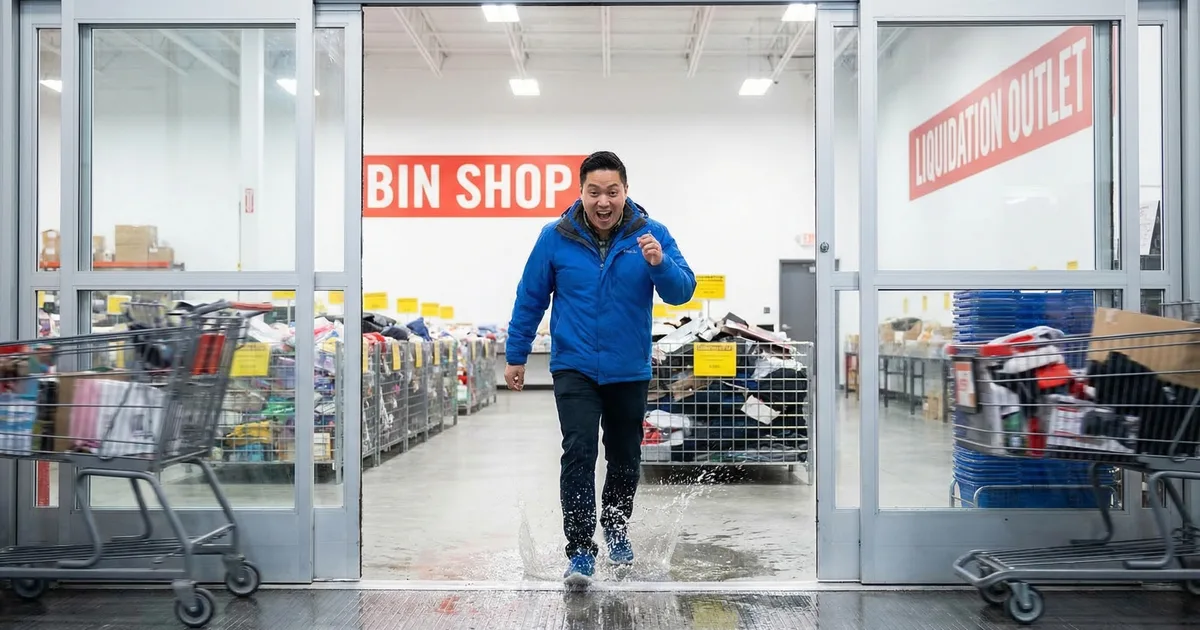
Bargain shopping has split into two distinct worlds. On one side, you have the physical bin store scene, also called liquidation stores, overstock stores, Amazon return stores, bin warehouses, and pallet liquidation outlets, places where returned and surplus merchandise from major retailers gets sorted into big open bins and sold at flat rates. On the other side, you have a sprawling universe of online platforms: eBay, Mercari, Facebook Marketplace, B-Stock, Liquidation.com, and direct discount retailers like Woot. Both models exist because consumers want deals. But the question of where your dollar actually goes further? That depends on a lot of specific factors most shopping guides skim right over.
This guide is built around one goal: helping you make a real, informed decision based on your shopping style, your location, what you're looking for, and how much time you want to spend. We pulled data from our directory of 1,252 bin store businesses across the country, looked at average pricing structures across both models, and put together something actually useful. No fluff.
Understanding the Two Shopping Models
What Actually Happens Inside a Bin Store
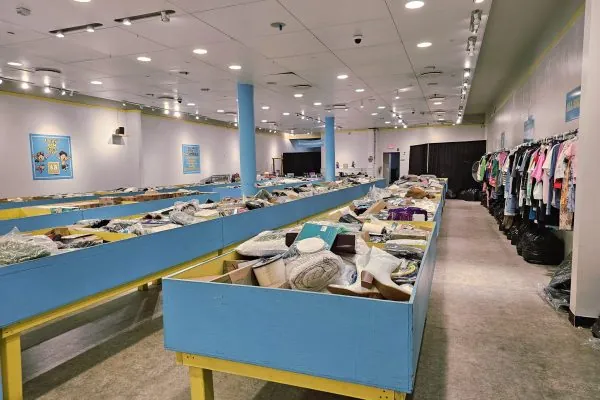
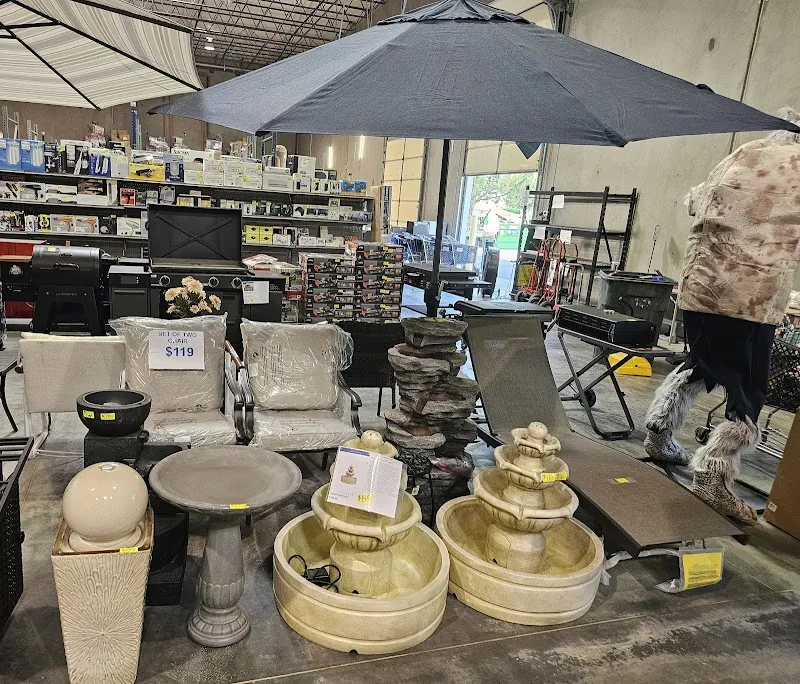
Walking into a bin outlet for the first time is a little chaotic in the best possible way. Rows of large plastic or cardboard bins stretch across a warehouse floor, stuffed with merchandise that arrived on return pallets from Amazon, Walmart, Target, and other major retailers. These stores, sometimes called bargain bin shops or return pallet stores, buy that merchandise in bulk lots, usually without knowing exactly what's inside every box. Then they sort it, drop it in bins, and let shoppers loose.
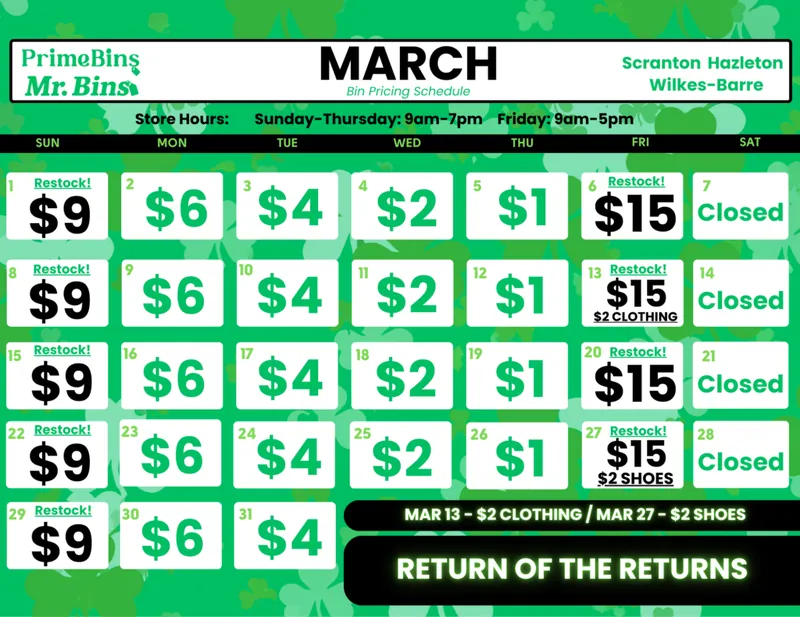
Pricing at a bin shop almost always works on a weekly cycle. Day 1 (usually Monday or Tuesday, depending on the store) has the freshest, most intact inventory and the highest per-item price, sometimes $8 to $12 per item. Each day after that, prices drop. By the end of the week, Saturday or Sunday, you might be paying $1 or $2 per item regardless of what it is. Savvy shoppers who know their local bin warehouse will hit it on Day 1 for electronics and high-value items before others grab them, then return later in the week for bulk hauls on lower-stakes goods.
You can touch everything. That matters more than people realize. At a pallet liquidation store, you can open boxes, power on electronics, check for cracks or missing parts, and decide on the spot whether something is worth your $4. That kind of real-time quality assessment is genuinely impossible when you're buying online.
Call your local bin store and ask what day they restock. Visit on restock day for electronics and brand-name goods, and go back near the end of the pricing cycle if you need quantity over quality, things like craft supplies, tools, or kids' clothing where minor imperfections don't matter much.
How Online Discount Retail Actually Works
Online discount shopping is a broader category than most people treat it as. There are really three distinct sub-types, and they work very differently from each other.
First, there are liquidation auction platforms like B-Stock and Liquidation.com. These sites sell actual return pallets and lots, the same kind of merchandise that ends up in a physical bin outlet, except you're bidding on it in bulk, often without seeing detailed manifests. Pallets can go for surprisingly cheap, but you also need somewhere to store 200 pounds of mixed merchandise, a way to get it shipped to you (which can cost $50 to $150+ depending on weight and distance), and time to sort through it all.
Second, peer-to-peer platforms like eBay, Mercari, and Facebook Marketplace work totally differently. Individual sellers list individual items, set prices, and negotiate. You can find genuinely great deals, but you're also doing a lot of work. Searching, comparing listings, reading seller feedback, waiting for shipping, and hoping the item matches the description. eBay sold listings typically show 30 to 60% off retail for used or returned goods, which is real savings, but not quite the 70 to 90% range you can hit at a physical bin shop on a clearance day.
Third, direct discount retailers like Woot or Overstock operate more like traditional stores, just cheaper. Prices are set, shipping is often flat-rate or free on certain orders, and return policies are more predictable. Less risk, but also less dramatic savings.
One thing that genuinely eats into online savings that people underestimate: buyer's premiums on auction sites usually run 10 to 15% on top of your winning bid. Add $60 in shipping on a pallet. Add your time sorting. That "80% off retail" deal starts looking more like 50% off after everything shakes out.
Price Comparison: How Deep Do the Discounts Really Go?
Breaking Down Bin Store Pricing
Most bin stores and bin outlets do not have complicated pricing structures. That's honestly one of their best features. You walk in, you see the price posted on a sign (usually a daily rate like "$5/item today"), and that's it. No shipping. No buyer's premium. No membership fee at most locations. What you see is what it costs.
Here's how the typical weekly pricing tier breaks down at a standard bin shop:
- Day 1 (Restock Day): $8–$12 per item. Freshest inventory, best selection, highest competition among shoppers.
- Day 2: $6–$8 per item. Still great selection, slightly less crowded.
- Day 3: $4–$6 per item. Good balance of price and availability.
- Day 4: $2–$4 per item. Pickings are thinner but deals get sharper.
- Final Day: $1–$2 per item (sometimes per pound). Whatever's left, priced to move fast.
Electronics, toys, and household goods tend to be the highest-value finds. A working Bluetooth speaker that retails for $45 sitting in a bin on Day 3 at $4 is a 91% discount. That's not unusual. It's actually kind of a normal Tuesday at a good pallet liquidation store.
Okay, that last sentence might sound like an exaggeration, but it really is not, the math works out that way regularly, which is why resellers show up in droves on restock days.
At a bin warehouse, bring AA and AAA batteries, a phone charger cable, and a small flashlight. Test every electronic before you buy. Most bin store staff will not mind, in fact, good stores encourage it. You can save yourself from bringing home a dead tablet.
Online Pricing: The Real Math
Online platforms look attractive at first glance because the advertised discounts sound massive. "Pallet of Amazon returns, $200, retail value $1,400!" But let's do actual math on that.
$200 for the lot. $75 freight shipping (standard for a small pallet). $30 buyer's premium (15% of $200). You're at $305 before you've touched anything. That pallet's "retail value" figure is often calculated at full MSRP for items that haven't sold at full price in years. Your actual resale value on those goods might be closer to $600–$800 if you're experienced. That's still profitable for resellers, but as a personal shopper looking for household deals? The economics get messy fast.
Individual item purchases on Mercari or Facebook Marketplace are a different story. A $15 blender that retails for $40 with $8 shipping is still 43% off with no real hassle, pretty good. These platforms reward patient shoppers who know what they want and check back often. But it's a fundamentally different experience from the treasure-hunt format of an overstock store.
Side-by-Side Comparison Table
| Criteria | Bin Store / Bin Shop | Online Discount Retail |
|---|---|---|
| Typical Discount Depth | 70–90% off retail | 30–60% (individual); up to 80% (bulk lots) |
| Hidden Costs | None (no shipping, no fees) | Shipping, buyer's premiums, return costs |
| Item Inspection | Full physical inspection before buying | Photos only; condition accuracy varies |
| Convenience | Requires travel; not in every city | Shop from home anytime |
| Selection Predictability | Random; changes weekly | Searchable; can find specific items |
| Best For | General household needs, resellers, treasure hunters | Specific item searches, remote shoppers |
| Time Investment | 1–2 hours per visit, in-person | Variable; can be quick or lengthy research |
| Risk Level | Low (inspect before paying) | Medium to High (especially bulk lots) |
Who Should Shop Where: Practical Guidance by Shopper Type
Not everyone shops the same way. This is probably the section most guides skip straight past, and it's actually the most important part.
You Should Prioritize a Bin Store If...
You live near one. That sounds obvious, but it's the single biggest factor. Our directory lists 1,252 bin store businesses across the country, with major concentrations in cities like Las Vegas (22 listings), New York (17 listings), Phoenix (14 listings), Colorado Springs (13 listings), and Honolulu (12 listings). If you're in or near one of those metros, you have real options, and the quality of local stores varies enough that checking reviews matters.
Look at what the highest-rated places in our directory are doing right. Deals Outlet Bin Store in Tallahassee, FL has a 5.0-star rating across 1,565 reviews. That's not a fluke, that kind of consistency comes from reliable restocks, fair pricing, and clean bins. Bin Fest in Deerfield Beach, FL sits at 5.0 stars with 382 reviews. Places like these are worth driving a little further for if you're serious about savings.
You should also lean toward a physical bin outlet if you're shopping for household goods, toys, seasonal decor, kitchenware, or small electronics, categories where you want to assess condition in person, and where the per-item savings at a bin store routinely crush what you'd find online after shipping costs are factored in. And honestly, if you enjoy the hunt? There's no online equivalent to finding something genuinely great buried under a pile of random stuff. It hits differently.
If you're also someone who stretches a budget across multiple categories, it's worth knowing that some shoppers combine bin store trips with salvage grocery runs. Salvage grocery stores operate on a similar model, buying surplus and near-date food products at steep discounts, and pairing both types of trips into one outing can make a real dent in your monthly household costs.
Online Makes More Sense If...
You need a specific thing. A bin shop is not where you go when you need a particular size of a particular item for a deadline. Online platforms, especially eBay and Mercari, let you search for exactly what you want, compare condition grades, and filter by price. That specificity has real value.
You're also in better shape online if you live somewhere with limited local options. Not everyone has a bin warehouse within reasonable driving distance. If the nearest liquidation store is 90 minutes away, the math on gas, time, and effort changes the equation considerably.
For resellers or small business buyers who need volume and don't mind the logistics, bulk liquidation platforms like B-Stock can still deliver strong margins, but that's a fundamentally different use case than personal shopping. Know which one you are before you commit to a pallet purchase.
Not all bin stores are created equal. Before visiting a local overstock store or bin outlet for the first time, search for it in a directory like ours and read recent reviews specifically. Look for mentions of "clean bins," "good restock days," and "friendly staff." A poorly run liquidation store can waste your whole afternoon.
The Hybrid Approach (Which Is Probably the Smart Play)
Most serious bargain shoppers do both, just for different things. Use your local bin shop for regular household scores, random finds, and those weekly clearance-day runs. Use online platforms when you need something specific, when you're buying a gift and can't risk condition uncertainty, or when you're hunting for a particular collectible or brand that almost never shows up in a bin.
I would pick a good bin store over any online option for general household goods, every single time. But for a specific model of camera lens or a particular video game? Online wins that one.
And if budget is tight across the board, don't overlook how much you can save by combining discount strategies. Pairing bin store trips with other smart buying habits, like checking discount grocery options in your area for food staples, compounds the savings in a way that really adds up over a month.
Practical Checklists Before You Shop
Before Your First Bin Store Visit
- Find a well-rated local bin shop in our directory (aim for 4.0 stars or higher, with at least 50 reviews)
- Call ahead to confirm what day they restock and what the current pricing tier is
- Bring reusable bags or a small tote, most bin outlets do not provide shopping bags
- Pack AA/AAA batteries and a short USB cable to test electronics on the spot
- Set a dollar budget before you walk in; the deals are real but it's easy to grab more than you planned
- Wear comfortable clothes, digging through bins is physical, especially on restock day
- Check the parking situation before going; some bin warehouses are in industrial areas where parking is surprisingly tricky
Before Buying on an Online Discount Platform
- Calculate the total cost: item price + shipping + buyer's premium (if auction site) + potential return shipping
- Read seller feedback carefully, especially recent reviews about item condition accuracy
- Check the platform's return/dispute policy before buying, liquidation purchases are often final sale
- For bulk pallet purchases, confirm you have space to store and time to sort the merchandise
- On eBay, check "sold listings"
More Ways to Save