What is a Bin Store? Your Complete Guide to Bargain Bins, Return Pallets, and Discount Treasure Hunting
You're standing in the checkout line at a big-box store, watching the total climb higher than you expected, and you think: there has to be a better way. Maybe you've heard a friend mention something about an "amazon return store" or seen a video of someone pulling a $200 coffee maker out of a bin for $8. You're curious, maybe skeptical, and you're not totally sure what a bin store even is or whether it's worth your time. That frustration is real, and honestly, more people are feeling it right now than ever before. This article walks you through everything: what bin stores are, how they work, why people love them, and what to expect when you walk through the door for the first time.

What Is a Bin Store?
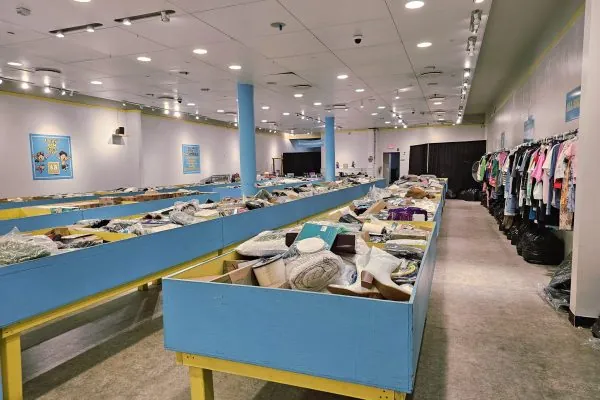
A bin store is exactly what it sounds like. It's a retail space where merchandise gets dumped into large open bins on the floor, and shoppers dig through those bins to find what they want. No hangers, no shelf tags, no organized departments. Just bins, products, and people hunting for deals. These places go by a lot of names depending on where you live: bargain bin, bin shop, bin outlet, bin warehouse, liquidation store, overstock store. Some people search for them as a "return pallet store" or a "pallet liquidation" shop. All of these terms basically point to the same kind of place.
Most of the inventory comes from Amazon returns, overstock pallets from big retailers like Target or Walmart, and general liquidation merchandise that major companies need to move quickly. When a customer returns a product to Amazon, that item usually can't go back on the shelf. Amazon bundles thousands of these returns into pallets and sells them to liquidators at a fraction of their original value. Those liquidators, in turn, sell to bin store owners or operate their own stores directly. So the sweater someone bought and returned in Ohio could end up in a bin in Minnesota two weeks later, priced at two dollars.

It's worth pausing on that supply chain for a second, because a lot of people assume these products are damaged or broken. Some are. But a surprising amount of bin store merchandise is completely new, never used, still in original packaging. Someone bought a blender online, didn't like the color, sent it back. That blender is now in a bin somewhere for $4. Unopened. That reality is part of what makes bin shopping so addictive once you experience it.
Bin stores are also sometimes called amazon return stores, which has become a popular search term as more people connect the dots between online shopping return rates and this retail format. E-commerce return rates hover somewhere around 20-30% for most product categories, which generates an absolutely staggering volume of merchandise that has nowhere obvious to go. Bin stores are one of the places that merchandise ends up.
How Bin Stores Work: The Business Model Explained
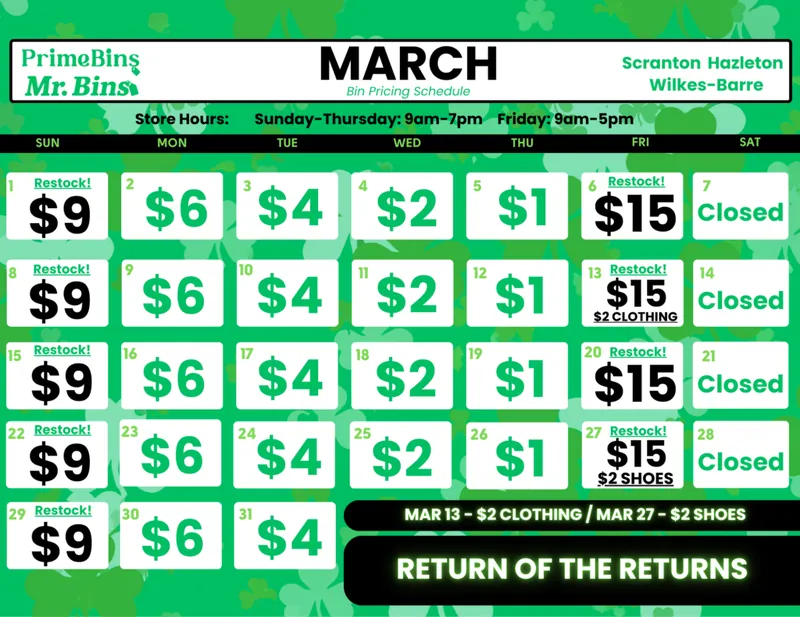
Understanding how a bin store operates helps you shop smarter. Most stores run on a weekly or sometimes daily restocking cycle, and this cycle is the beating heart of the whole business model. Here's how it usually goes: on restock day, the store clears out whatever's left in the bins and fills them fresh with new merchandise from recently acquired pallets. Prices on that first day are at their highest, though still dramatically below retail. As the days pass and items don't sell, the price drops. By the end of the cycle, sometimes everything in the bins is a dollar or even free.
Say a store restocks every Monday. Monday pricing might be $8 per item. Tuesday drops to $5. Wednesday it's $3. Thursday everything is a dollar. Friday the bins get cleared and the whole thing starts again. Some stores post their pricing schedule on a chalkboard near the entrance. Others make you ask. Good bin store owners are usually happy to explain the system because they want repeat customers.
And repeat customers are exactly what these places get. There's a social dimension to bin shopping that doesn't get talked about enough. Regulars develop routines. They know which stores restock on which days, they arrive early, and they have a real sense of which bins are worth digging into first. I've seen people at these stores who clearly know exactly what they're doing: methodically working through bins from one end to the other, pulling out items, checking condition, making quick decisions. It almost looks like a sport.
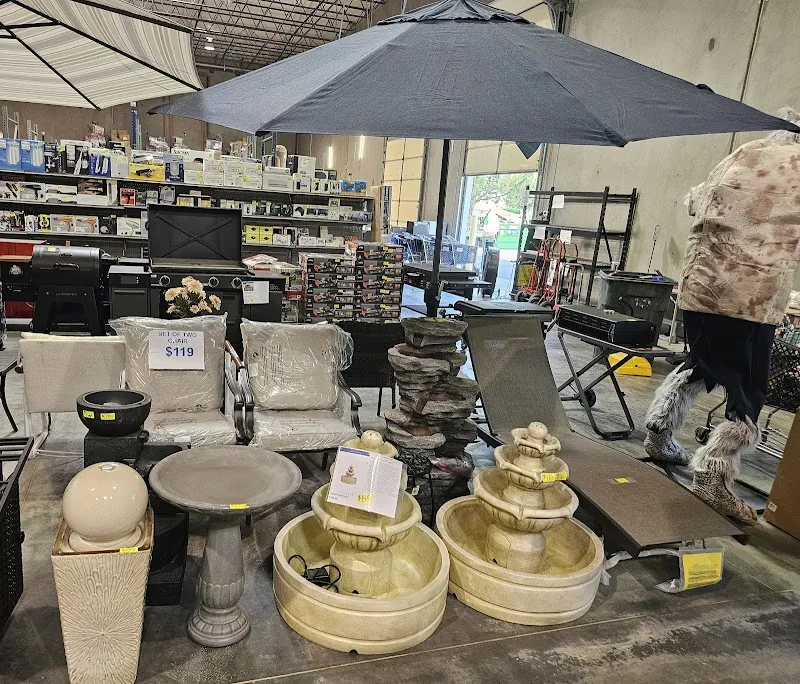
The merchandise itself is wildly varied. Electronics, kitchen appliances, clothing, shoes, books, baby products, toys, sporting goods, tools, beauty products. A single bin might have a portable Bluetooth speaker next to a pair of jeans next to a set of measuring cups. That randomness is the point. You do not know what you're going to find. That unpredictability is either thrilling or exhausting depending on your personality, but for the right shopper, it's genuinely one of the most fun ways to spend an hour.
Bin store owners source their inventory primarily through wholesale liquidation companies that aggregate returns and overstock from major retailers. Some owners buy directly at liquidation auctions, bidding on pallets sight unseen or with only a basic manifest listing the general product categories. The risk is part of the game on the supply side too. A pallet purchased for $300 might yield $2,000 in sellable goods or it might be mostly damaged junk. That variance keeps margins unpredictable, which is why the pricing model with dropping rates throughout the week helps stores move everything efficiently.
Before your first visit, call ahead or check the store's social media to find out when they restock. Arriving within the first hour of a restock gives you the widest selection, even if the prices are slightly higher. If you're flexible on price and just hunting for specific categories, end-of-cycle visits can yield incredible deals on whatever's left.
The Benefits of Shopping at a Bin Store
Let's be direct about the biggest draw: the prices. Bin stores sell things for a fraction of what you'd pay anywhere else. Not "20% off retail" kind of savings. More like "I just paid $6 for a KitchenAid hand mixer that normally costs $50" kind of savings. Flat-rate pricing is common, where everything in the bins costs the same amount on a given day regardless of what the item actually is. So a pair of Nike sneakers and a pack of dish sponges both cost the same $5 on a Thursday.
That pricing structure can feel almost absurd the first time you encounter it. And honestly, it should. You are getting access to brand-name, often brand-new merchandise at prices that don't make sense by normal retail logic. That's the whole model.
Beyond price, there's a real sustainability benefit that doesn't get enough attention. Returned merchandise is a massive problem for the retail industry. A lot of it ends up in landfills, which is genuinely wasteful when you're talking about products that are perfectly functional. Bin stores divert that merchandise and put it into the hands of people who will actually use it. If you're someone who thinks about the environmental footprint of your shopping habits, a bin outlet or pallet liquidation store is actually one of the more responsible places to buy stuff. You're giving products a second life instead of letting them sit in a warehouse or worse.
If you're also interested in similar budget-conscious shopping for everyday essentials, salvage grocery stores in your area follow a similar concept for food and household staples, sourcing near-expiration or surplus items at deep discounts. It's a whole world of discount retail that most people don't know exists until someone tells them.
Variety is another genuine benefit. Because inventory changes so frequently and comes from such a wide range of sources, every visit to a bin store is different. You might find a high-end skin care set worth $80 for $3. You might find nothing you want. Both outcomes are possible. But over time, regular shoppers tend to find that the hits outweigh the misses by a wide margin, especially if they learn which types of merchandise tend to show up at their local store and when.
Bin stores also tend to attract a more laid-back shopping environment than traditional retail. No sales staff hovering nearby. No upselling. Nobody pushing extended warranties. You look at what's there, you decide what you want, you pay a simple flat rate or per-item price, and you leave. That simplicity is appealing to a lot of people who find regular retail shopping kind of exhausting.
Bin Stores vs. Other Discount Retail Formats
People often lump bin stores together with thrift shops, dollar stores, or outlet malls, but they're actually pretty different from all of those.
A traditional thrift store like Goodwill sells donated goods, which means the inventory is genuinely used, often older, and donated by individuals. Bin stores mostly carry new or like-new merchandise from commercial sources. That's a meaningful difference if you're looking for something specific or care about condition. Outlet stores sell overproduced or out-of-season merchandise from specific brands, usually at 20-50% off retail. That's a discount, sure, but it's nowhere near what you'd find at a bargain bin or bin warehouse on a Thursday when prices have dropped to a dollar per item.
Dollar stores have a fixed, consistent inventory that's been specifically sourced for that price point. You generally know what you're going to find at a dollar store because it doesn't change much. A bin store is the opposite. Wildly inconsistent, always changing, occasionally bizarre.
Online liquidation platforms exist too, and they're worth mentioning. Sites that sell liquidation pallets directly to consumers let you bid on entire lots of merchandise, but you're buying unseen and then waiting for shipping. With a physical bin store, you can actually see and handle each item before you buy it. That hands-on experience matters a lot when you're trying to assess condition, especially for things like electronics or clothing. Picking up an item, checking for damage, reading the product label in person is just a fundamentally different experience than looking at a blurry manifest photo online.
Consignment shops split the difference in another direction. They sell used goods on behalf of individual sellers and usually charge more per item because they're curating inventory more carefully. Bin stores don't curate. That's not an insult; it's a feature. In practice, the chaos is part of the appeal. Early shoppers on restock day get first pick of everything, which creates a real incentive to show up and dig.
Bin Stores by the Numbers: Data and Directory Insights
Bin Store Pal currently lists 2 bin store businesses across 2 cities. That's a small number, and it reflects where the directory is right now rather than the total number of bin stores operating in the country. But here's what's interesting about that data: both listed stores carry an average rating of 5.0 stars. Perfect scores. That's not common in any retail category.
| Business Name | City | State | Rating | Reviews |
|---|---|---|---|---|
| Bargain Bin | Deer River | MN | ⭐ 5.0 | 1 review |
| Listed Location | Oklahoma City | OK | ⭐ 5.0 | Verified |
Bargain Bin in Deer River, Minnesota holds a 5.0 star rating. Deer River is a small town, not a major metro. And yet someone drove there, had a great enough experience to leave a perfect review, and that review is sitting there as a data point. That tells you something about how much goodwill these stores generate with the right customers.
Oklahoma City's listing rounds out the two verified locations, giving the directory geographic spread from the rural Midwest to a mid-size southern city. Two different markets, same perfect rating. Typically, the format seems to work regardless of setting, which makes sense when you think about it: everybody likes saving money, whether you're in a small Minnesota town or a city of 700,000 people.
As a rule, the bin store industry as a whole is growing. More liquidation merchandise is entering the market as e-commerce continues to grow, which means more raw material for bin store operators to source. Many stores operate with small teams or even as solo owner-operated businesses, which keeps overhead low and allows them to pass savings on to customers. For most shoppers, the format rewards operators who are good at sourcing and good at building regular customer relationships.
Bin Store Pal is actively growing its directory. If you know of a bin store, return pallet store, or pallet liquidation shop in your area that isn't listed yet, that's a gap worth filling. And if you're searching for a location right now, the directory search is the fastest way to find verified, rated businesses in your region.
What to Expect on Your First Visit to a Bin Store
Walking into a bin store for the first time is a little disorienting if you're used to regular retail. No aisles. No departments. Usually just a large open room with rows of large plastic bins, each one filled to varying degrees with mixed merchandise. Some stores are brightly lit and well-organized in terms of layout, with clear signs indicating which bins are which. Others are more warehouse-style, functional but not pretty. Don't judge a bin store by its decor.
Arrive early on restock day. This is the single most important tip for a first visit. Early arrival on restock day means you're picking from a full set of bins before other shoppers have gone through them. Prices are slightly higher, but you have the widest possible selection. If you're after a specific type of item, say electronics or clothing, early arrival on restock day dramatically improves your odds of finding something good.
Bring reusable bags. Most bin stores don't provide bags, or they charge for them. A couple of sturdy tote bags make the whole experience easier, and you'll feel better about the environmental angle too. Cash is helpful, though most stores accept cards. Some smaller operations are still cash-preferred, so it's worth having a few bills just in case.
Inspect items before you buy. This is not a store where you grab something and trust that it's fine. Check electronics for obvious damage. Look for missing parts. Clothing items usually don't have the option to try on, so check sizing labels carefully. Most bin stores do not accept returns, which is completely reasonable given the pricing, but it means your assessment at the bin is your only chance to make the call. Spend an extra thirty seconds on anything that needs to work correctly.
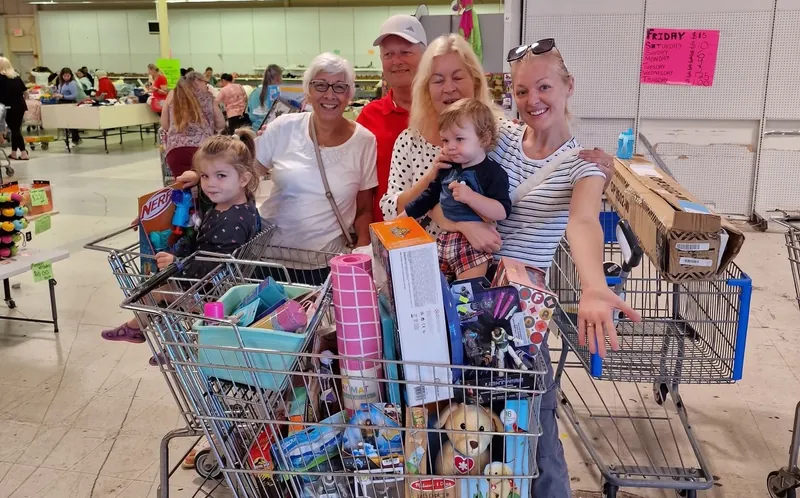
One last thing: bin store regulars are usually a friendly crowd. If you look lost or confused, someone will almost certainly explain how the pricing works or point you to the bins that were just restocked. There's a community aspect to these places that's kind of unexpected and genuinely nice. Especially at smaller owner-operated locations like Bargain Bin in Deer River, the store tends to feel more like a local gathering spot than a typical retail transaction.
Go with low expectations and an open mind. You might find nothing. You might find something incredible. Either way, you'll leave knowing exactly how this whole world of discount bin shopping works, and you'll probably be back.
Frequently Asked Questions About Bin Stores
Are bin store products new or used?
Most merchandise at a bin store or bin outlet comes from Amazon returns and retail overstock, so a lot of it is new or barely used, sometimes still in original packaging. Some items may have been opened, returned, or lightly used. Always inspect items before buying since most bin stores do not accept returns.
How are prices set at a bin store?
Most bin stores use a rolling price model tied to their restock cycle. Prices start higher on restock day and drop each subsequent day until the bins are cleared again. Some stores use flat-rate pricing where everything costs the same on a given day, regardless of what the item actually is.
What is the difference between a bin store and a thrift store?
A thrift store sells donated, secondhand goods from individual donors. A bin store sells new or like-new returned and overstock merchandise sourced from retailers and e-commerce platforms. Bin store inventory is generally in better condition and comes from commercial supply chains rather than individual donations.
What kinds of products can I find at a bin store?
Pretty much anything. Electronics, clothing, shoes, kitchen appliances, tools, beauty products, toys, books, and home goods all show up regularly. Inventory varies dramatically from week to week depending on what pallets the store has sourced recently. That unpredictability is a big part of the appeal.
How do I find a bin store near me?
Bin Store Pal is a directory specifically for bin stores, bargain bin shops, pallet liquidation stores, and related formats. You can search by city or state to find verified, rated locations near you. Currently the directory lists locations in Deer River, Minnesota and Oklahoma City, Oklahoma, with more being added as the directory grows.
Are bin stores environmentally friendly?
Yes, in a meaningful way. Bin stores divert returned and overstock merchandise from landfills by giving products a second chance to be bought and used. Given the enormous volume of e-commerce returns generated every year, bin stores play a real role in reducing retail waste. If sustainability matters to you in your shopping habits, this format is worth considering. You might also want to explore salvage grocery options in your area for a similar approach applied to food and household staples.
More Ways to Save
Find Bin Store Pal Near You
Browse our directory of 2+ businesses and find a bin store, bargain bin, or pallet liquidation shop near you. Every listing is verified and rated by real customers.
Search the Directory