The Cost of Shopping at a Bin Outlet: Budgeting Tips and Tricks
Picture this: you're standing over a giant plastic bin overflowing with random stuff, a blender here, a pack of socks there, maybe a brand-new air fryer still in its box, and everything in that bin costs two dollars. You've got an armful of items you don't entirely need, and you're already doing math in your head. That feeling is exactly why bin outlet shopping has taken off the way it has, and also exactly why so many people walk out having spent way more than they planned.
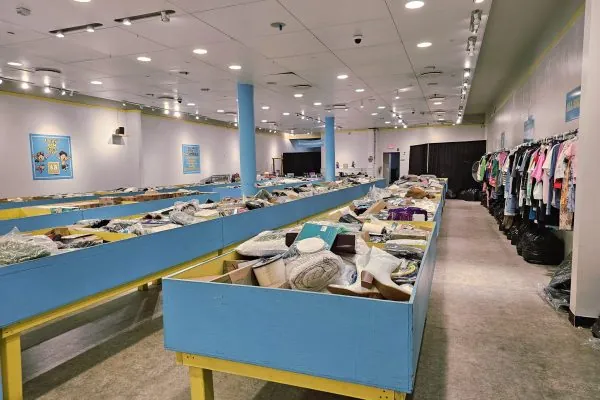
A bin outlet, also called a bargain bin, bin shop, liquidation store, overstock store, Amazon return store, return pallet store, or bin warehouse, is a retail format where merchandise from retailer overstock, customer returns, and pallet liquidation gets dumped into large bins and sold at deeply discounted prices. Some people call them bin stores. Some call them discount bins or pallet stores. Whatever the name in your area, the concept is the same: someone returns a Roomba to Amazon, it ends up on a liquidation pallet, a bin store buys that pallet, and you get a shot at buying that Roomba for a fraction of what it cost new. The appeal is obvious. But the budgeting side of it? That takes a little more thought.
This article is about the real cost of shopping at a bin outlet, both the prices you see and the ones you don't, and how to actually plan for a trip so you come out ahead instead of confused about where your forty bucks went.
How Bin Outlet Pricing Actually Works
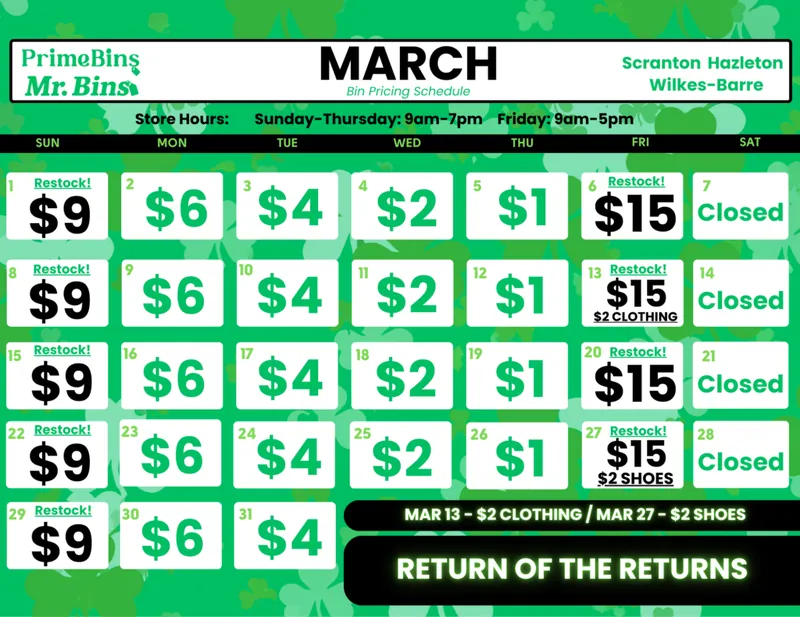
Most bin stores run on a weekly pricing cycle, and understanding that cycle is the single most useful thing you can know before walking in. Here's the basic structure: a store restocks its bins on a set day, usually early in the week, and prices start relatively high on that day, somewhere in the $7 to $10 per item range. Each day that passes, the price drops. By the end of the cycle, you might be paying $1 or $2 for anything left in the bin. Then the cycle resets.
Why does this matter for your budget? Because the day you visit completely changes what you spend and what you get. Early in the cycle, selection is fresh and you have the best shot at finding something valuable, but you pay more per item. Late in the cycle, prices are rock bottom, but the good stuff has already been picked over. Knowing which day is which for your local store is genuinely important planning information, not just trivia.
Most bin outlets post their restock day and daily pricing schedule on Facebook or Instagram. Search for your store by name before visiting. Knowing whether Tuesday is a $7 day or a $2 day changes everything about how much cash to bring.
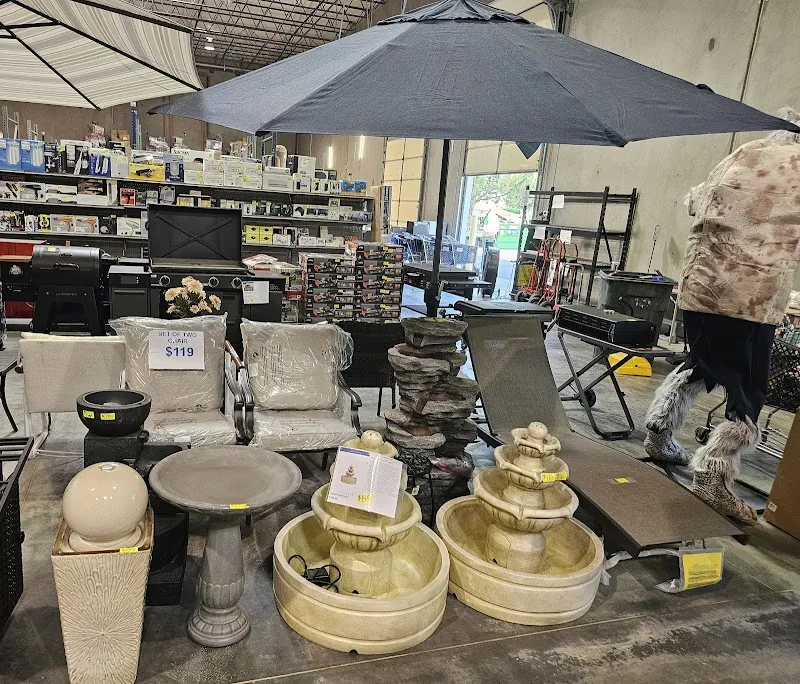
Merchandise at these places comes from a few different sources. Amazon returns are a big one, when you return something to Amazon and it can't be resold as new, it often ends up in a liquidation channel. Retailer overstock, seasonal clearance, and shelf pulls from big-box stores follow a similar path. All of that inventory gets bundled into pallets, sold at auction or through liquidation brokers, and then sorted (or not sorted, depending on the store) into bins. That means what you find is genuinely random. One bin might have kitchen gadgets and a set of golf balls. Another might be all phone accessories and one very confused stuffed animal.
Pricing models also vary quite a bit between stores. Some charge per item, some charge by weight (which is more common for clothing-focused stores), and some have flat-rate bins where everything in a specific bin costs the same regardless of what it is. Before you visit a new store, look up how they price things. Going in without knowing this is like going to a restaurant without knowing whether it's a buffet or a la carte.
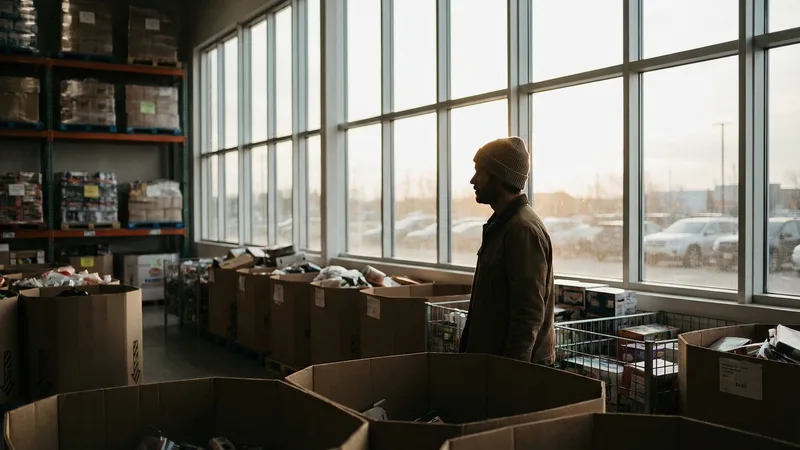
The Real Cost of a Bin Store Trip (It's More Than the Sticker Price)
Direct costs are easy to see. You pay $3 per item on a Wednesday, you grab ten items, you spend thirty dollars. Simple. But the full cost of a bin outlet trip has more moving parts than that, and most of them aren't written on any price tag.
Some stores charge an admission fee on restock day, typically between $2 and $5, because the crowds on fresh inventory days are intense and the fee helps manage traffic. Not every store does this, but it's worth checking. A few stores also have minimum purchase requirements on certain days. Small costs individually, but they add up to your real trip budget.
The bigger hidden cost is impulse buying. And honestly, it's almost impossible to avoid at first. When prices are low, the mental math changes. You start thinking in terms of "this is only a dollar" rather than "do I actually need this." A dollar here, two dollars there, and before you know it you've got a cart full of random stuff that totals $47 and includes three items that don't work and two that you have nowhere to put. I've watched people load up on surplus packaging tape and decorative throw pillows in the same visit. In practice, the prices were fair. Typically, the buying logic was debatable.
Damaged and incomplete items are also a real cost factor. Return pallet merchandise is sold as-is, and bin stores almost universally do not accept returns. If you buy a cordless drill that turns out to be missing the battery, that's on you. If the blender lid is cracked, you own a cracked blender. Factoring in a small "loss percentage" in your mental budget, maybe 10 to 15% of what you spend, for items that don't pan out is just honest math.
Travel time is a real cost too, especially if there isn't a bin store nearby. Gas, parking, and an hour or two of your Saturday afternoon all count. If you're driving forty minutes round-trip to save money on discount goods, you need to save enough to make that worthwhile. For occasional big hauls, absolutely worth it. For a casual browse where you spend twelve dollars on random stuff, maybe less so.
Budgeting Tips Before You Even Leave the House
Cash is king at a bin outlet. Full stop. Bringing a set amount of physical cash is the most reliable way to enforce a spending limit, because once it's gone, it's gone. Cards make it too easy to keep going. You tell yourself you'll stop at forty dollars, but the card doesn't know that and neither does your excitement when you find a brand-new KitchenAid stand mixer for eight bucks.
Before you go, do a little homework. Look up the store's weekly pricing schedule, most bin stores post this on social media, and some have it on their website. Figure out what day aligns with your goal. If you want the best selection and don't mind paying a bit more, go on restock day. If you want the lowest prices and you're buying everyday stuff where condition matters less, go near the end of the cycle. Planning your visit around the pricing calendar is free money, basically.
Make a loose list. Not a rigid grocery list, but a category list. Something like: "I need storage containers, workout clothes, and maybe a small kitchen appliance." That gives you a filter for what goes in your cart and what you put back. As a rule, the problem with bin shopping without any list is that everything looks like a deal when it's two dollars, and "deal" is not the same thing as "useful."
Try this before you go: decide on a firm cash limit, then subtract 15% mentally for items that might not work out. If you bring $40, plan to "keep" about $34 worth of functional items. That buffer saves a lot of post-trip frustration.
Also, and this is weirdly specific but genuinely helpful, wear something with pockets or bring a small bag you can keep items in as you shop. Bin stores can get chaotic, especially on restock days, and having both hands free to dig through bins while keeping track of what you've already grabbed prevents the common problem of setting something down and losing it or, worse, accidentally carrying more than you realize to the register.
Smart Strategies While You're Actually in the Store
Inspect everything before it goes in your cart. Every single thing. Check electronics for physical damage and missing components. Look at clothing for stains, missing buttons, or broken zippers. Check expiration dates on anything consumable. Look at the bottom and back of items, not just the front. Bin store merchandise is returns and overstock for a reason, and while plenty of it is perfectly good, some of it has a problem that's only visible if you look. No return policy means the inspection happens before the register, not after.
Early in the week is when you want to hunt for high-value items. Electronics, tools, brand-name clothing, small appliances, these get found and bought fast. If there's a specific category of item you're hoping to find, early-cycle visits give you the best shot. Later in the week, when prices are at their lowest, that's ideal for stocking up on things where condition is less critical: cleaning supplies, basic kitchen items, craft materials, packaging goods, stuff like that.
Use your phone's calculator as you shop. Keep a running total. Set yourself a rule before you walk in: if you hit your budget limit while still shopping, you have to put something back before adding anything new. This sounds obvious, but almost nobody actually does it until they've had one trip where they blanked out and spent twice what they intended. A running total keeps the number real instead of abstract.
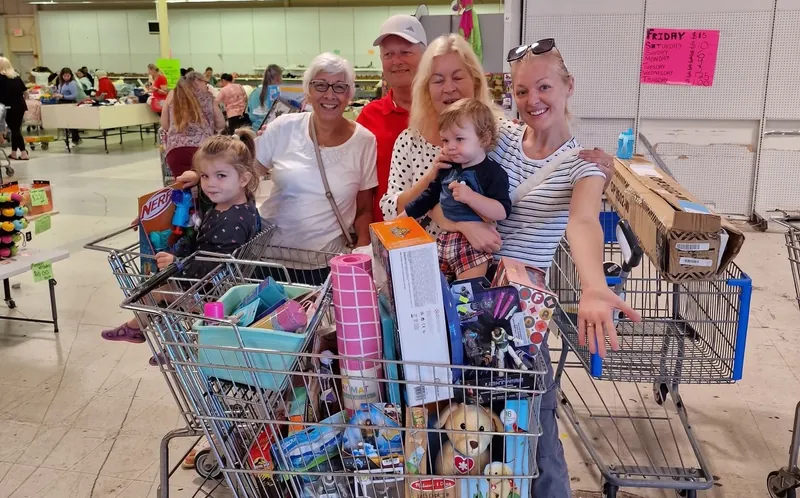
One more thing worth mentioning: the parking lot at most bin stores on restock day looks like a farmer's market crossed with a swap meet. People bring their own bags, carts, even wheeled bins sometimes. If you plan to buy in volume, bring bags. Most stores charge for bags or don't provide them at all.
The Industry Numbers Behind Bin Outlet Growth
Bin store shopping isn't a niche hobby anymore. According to data from the Bin Store Pal directory, there are currently over 1,252 bin outlet businesses listed across the country. That's a real number that reflects just how much this format has grown in the last few years, driven partly by the explosion in e-commerce returns and partly by shoppers looking for alternatives to full-price retail.
Geographic spread is interesting here. Las Vegas leads with 22 listings, followed by New York with 17, Phoenix with 14, Colorado Springs with 13, and Honolulu with 12. That these markets are so different from each other, a desert gambling city, a dense northeastern metro, a mountain city, a remote island, tells you something about the universal appeal of discount retail. It's not a regional thing. People everywhere are looking for a better deal.
Average customer ratings across listed businesses sit at 4.2 stars, which is genuinely solid for any retail format. Some stores are doing even better than that. The Other Side Thrift Boutique in Millcreek, Utah holds a 5.0-star rating across more than 5,000 reviews, which is remarkable. Deals Outlet Bin Store in Tallahassee, Florida has 5.0 stars with 1,565 reviews. Deals Outlet Bin Store in Gainesville, Georgia, 5.0 stars with 662 reviews. Bin Fest in Deerfield Beach, Florida, 5.0 stars with 382 reviews. These aren't flukes. Stores that run their pricing cycles cleanly, stock good merchandise, and treat customers well are building real loyalty.
| Business Name | Location | Rating | Reviews |
|---|---|---|---|
| The Other Side Thrift Boutique | Millcreek, UT | ⭐ 5.0 | 5,092 |
| Deals Outlet Bin Store | Tallahassee, FL | ⭐ 5.0 | 1,565 |
| Deals Outlet Bin Store | Gainesville, GA | ⭐ 5.0 | 662 |
| Bin Fest | Deerfield Beach, FL | ⭐ 5.0 | 382 |
| The UPS Store | Pasadena, MD | ⭐ 5.0 | 172 |
For most shoppers, the growth of pallet liquidation retail also connects to broader shifts in how goods move. Returns in e-commerce have exploded over the past decade, and retailers simply cannot process and resell all of it through traditional channels. That overflow has to go somewhere. Bin stores are one of the places it goes, and shoppers who understand that supply chain reality can benefit directly from it.
If you're someone who also tries to cut costs on groceries, it's worth knowing that a similar model exists for food. You can browse salvage grocery options in your area to find stores that sell surplus, near-date, and overstock food products at reduced prices. Same basic idea as a bin store, different category of goods.
Does Regular Bin Store Shopping Actually Save You Money?
Compared to full retail, yes, obviously. Compared to thrift stores, it depends. A well-stocked thrift store on a good day might offer similar prices on clothing and housewares, but thrift stores don't typically carry new-in-box electronics or sealed household goods the way a bin outlet does. For specific categories, especially tools, small appliances, and brand-name household products, the bin store tends to win on price and condition.
But the savings only hold if you're disciplined. A shopper who visits a bin store every week and buys whatever looks interesting because it's cheap is not saving money. They're spending money in a more exciting location. Savings happen when you're buying things you would have bought anyway, at lower prices than you'd have paid elsewhere. That's the mental shift that makes bin store shopping genuinely useful for a budget rather than just a different kind of retail habit.
Regular shoppers who get the most out of these places tend to approach them with a specific purpose: restocking household supplies, sourcing items to resell, finding gifts, or building out a tool collection over time. Purposeful visits with a budget in hand beat casual browsing almost every time. Cash limits work. Lists work. Knowing your pricing cycle works. None of it is complicated, it just requires doing it deliberately instead of impulsively.
And if you're evaluating a specific store for long-term visits, check its reviews. That 4.2-star average across the directory is encouraging, and the stores with thousands of positive reviews are clearly doing something right in terms of merchandise quality and pricing consistency. A bin shop with 4.8 stars and 800 reviews is a much safer bet for a first visit than one with a dozen reviews and a mixed track record.
Frequently Asked Questions
What is a bin outlet store?
A bin outlet, also called a bargain bin, bin shop, liquidation store, or Amazon return store, is a retail store that sells returned, overstock, or surplus merchandise from major retailers, usually dumped into large bins and sold at deeply discounted prices. Pricing typically drops throughout the week from a high on restock day to a low near the end of the cycle.
How much should I budget for a bin store trip?
It depends on the store's pricing model and which day of the cycle you visit. A reasonable starting budget for a casual visit is $20 to $40 in cash. On low-price days (end of cycle), $20 can buy quite a bit. On restock days with higher per-item prices, $40 might get you 4 to 6 items. Bringing cash instead of a card helps you stick to whatever limit you set.
Can you return items at a bin outlet?
Almost never. Most bin stores have a strict no-return policy because merchandise is sold as-is. This is why inspecting every item carefully before buying is so important. Check for damage, missing parts, and functionality issues before you reach the register.
What's the best day to shop at a bin store?
It depends on your goal. Restock day (usually early in the week) has the freshest selection and the best chance of finding valuable items, but