The Complete Guide to Bin Store Pal: Everything You Need to Know
Ever wondered where all those Amazon returns actually end up? A huge chunk of them land in bin stores, and shoppers who know about these places are finding incredible deals every single week. Bin Store Pal is a business directory built specifically to connect those shoppers with local bin stores, liquidation outlets, overstock stores, and discount retailers in their area. It takes what used to be word-of-mouth knowledge and puts it all in one searchable place.

Bin store shopping has exploded in popularity over the last few years, and it's not hard to see why. People are stretched thin financially, retail prices keep climbing, and there's something genuinely exciting about not knowing what you'll find when you show up. This guide covers everything: what bin stores actually are, how Bin Store Pal works as a directory, what the current data shows about the industry, and practical tips for finding and evaluating a good store near you. By the end, you'll know exactly how to use this platform and what to expect when you walk through the door of your first bin store.
What Is a Bin Store? Understanding the Basics
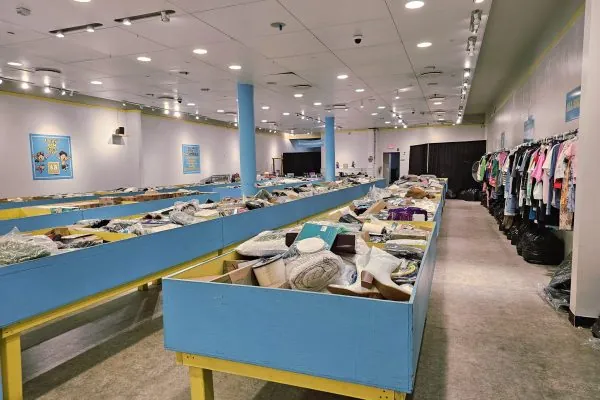
A bin store is exactly what it sounds like. Walk in, and you'll find rows of large, usually plastic or cardboard bins overflowing with merchandise, everything from kitchen gadgets to kids' toys to unopened electronics. These places go by a lot of names: bargain bin, bin shop, liquidation store, overstock store, bin outlet, bin warehouse, return pallet store. You might also hear people call them Amazon return stores or pallet liquidation shops, especially online. All of these terms basically point to the same shopping experience, though the exact inventory and setup can vary quite a bit from store to store.
So where does all this stuff come from? Most bin stores source their inventory through reverse logistics channels, which is the industry term for what happens after a product gets returned or doesn't sell. When you return something to Amazon, Target, Walmart, or almost any major retailer, that item rarely goes back on the shelf. Instead it gets routed through a chain that often ends at a liquidation wholesaler, who sells pallets of mixed merchandise to smaller retailers. Those smaller retailers are your local bin shops. Some stores buy directly from Amazon's official return auction program (AMZN Liquidations), while others purchase from third-party liquidators who aggregate returns from multiple sources.
Walking into one for the first time is genuinely a little overwhelming in the best way. Bins are packed high, people are digging through them with real focus, and you can smell the faint mix of cardboard, plastic wrap, and whatever random cleaning products ended up in that week's shipment. Pricing is usually flat-rate per item, which means everything in a bin costs the same amount regardless of what it is. You might pay $5 for a phone charger sitting next to a $5 Bluetooth speaker that retails for $60. That's the whole appeal.
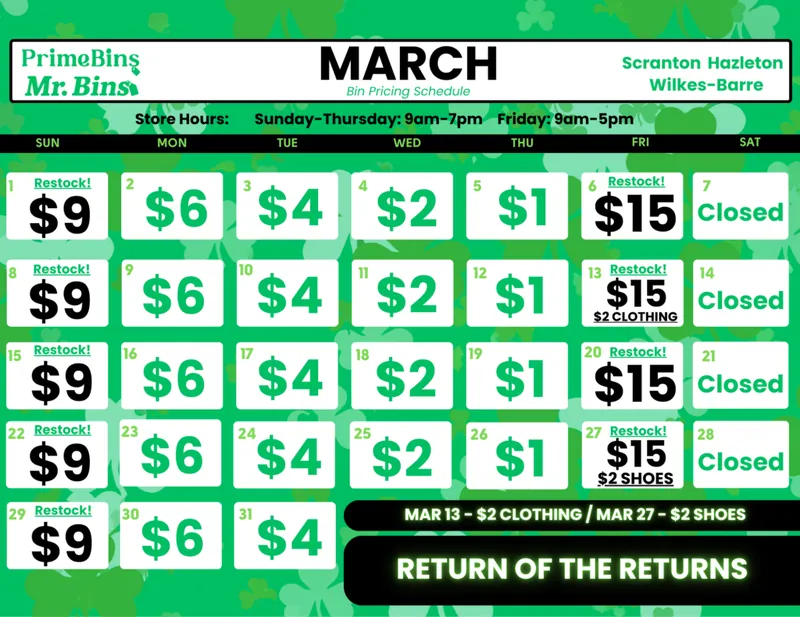
Prices at most bin stores follow a weekly cycle. When fresh stock hits on restock day (often Monday or Tuesday), prices are highest, sometimes $8 to $15 per item. By Friday or Saturday, that same bin might be down to $1 or $2 per item as the store clears out before the next restock. Experienced shoppers know to hit the store mid-week if they want the best selection, or at the end of the week if they want the lowest prices on whatever's left. You kind of have to decide what matters more to you.
Ask any bin store employee when they restock and when prices drop throughout the week. Most stores follow a predictable pricing cycle, and knowing it can save you serious money. Early in the week means more selection; late in the week means lower prices on remaining items.
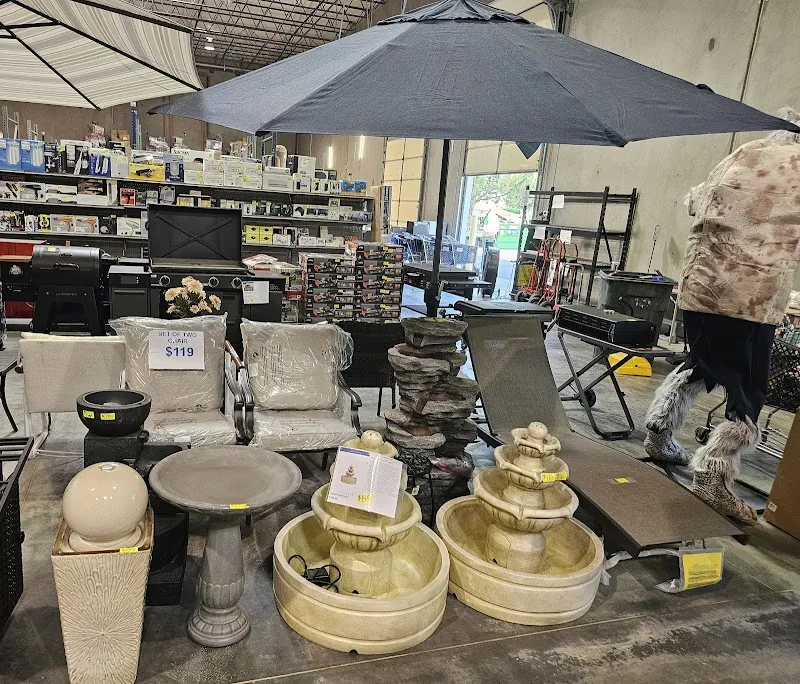
Product categories are all over the place. On any given visit you might find brand-name cookware, unopened video games, random hardware supplies, beauty products still in their original packaging, and a truly bewildering assortment of things you did not know existed. That's part of what makes these places so addictive for regular shoppers. Each visit is completely different from the last.
How Bin Store Pal Works as a Directory

Bin Store Pal functions as a targeted business directory, meaning its entire purpose is to list bin stores, liquidation stores, overstock retailers, and similar discount shops so that shoppers can actually find them. This might sound simple, but it solves a real problem. Many bin stores don't have huge advertising budgets. Some are small family operations that rely almost entirely on foot traffic and word of mouth. A shopper who just moved to a new city, or someone who's heard about bin store shopping for the first time, has no reliable way to find these places through a standard Google search without wading through a lot of noise.
That's exactly the gap Bin Store Pal fills. Each business listing on the platform includes location information, contact details, hours of operation, and customer ratings. Shoppers can search or browse by city or region, which makes it easy to pull up whatever is available near them without having to cross-reference multiple random websites or Facebook groups. And honestly, that convenience factor matters more than people realize when you're trying to plan a quick shopping trip.
For business owners, getting listed on a directory like this is genuinely useful. A bin outlet or pallet liquidation shop that appears in a targeted directory is reaching people who are actively looking for exactly that type of store. That's a different and much more valuable kind of visitor than someone who stumbles across your business by accident. Owners can list their store's address, phone number, and hours, and customers can leave ratings that help other shoppers gauge whether a place is worth the drive.
Shoppers benefit because they can see ratings before they go anywhere. Nobody wants to drive 45 minutes to a bin store that turns out to be a disorganized mess with nothing worth buying. Reading reviews and checking ratings in advance lets you make smarter decisions about where to spend your time and energy.
Right now, Bin Store Pal is in an early stage of growth. There are currently 2 businesses listed across 2 cities, with Deer River, Minnesota and Oklahoma City, Oklahoma each claiming one listing. Those numbers will change as more store owners discover the platform and more shoppers start using it to find local deals. A directory's value compounds over time as the number of listings grows, so getting in early as either a shopper or a business owner has its advantages.
The search experience itself is clean and focused. You look up your city, see what's listed, and get the basic information you need to plan a visit. No subscription required, no complicated account setup. Just a practical tool for connecting discount shoppers with the stores that serve them.
The Bin Store Industry: Data, Statistics, and Market Overview
Here's where things get genuinely interesting from a numbers standpoint. Let's start with what the Bin Store Pal directory currently shows, then zoom out to the broader market.
Bargain Bin in Deer River, MN holds a perfect 5.0-star rating based on its current reviews. Oklahoma City's listing matches that standard. Across both businesses on the platform, the average customer rating is 5.0 stars. That's a remarkable starting point for a young directory, and it suggests the stores currently featured are doing something right.
| Business Name | Location | Rating | Reviews |
|---|---|---|---|
| Bargain Bin | Deer River, MN | ⭐ 5.0 | 1 review |
| Listed Business | Oklahoma City, OK | ⭐ 5.0 | — |
Now for the bigger picture. Retail returns in the United States generate somewhere between $400 billion and $800 billion worth of merchandise annually, depending on the estimate you're looking at. A significant portion of that merchandise cannot be economically restocked or resold through traditional channels, so it enters the liquidation market. That's the raw material that feeds every bin store, overstock store, and pallet liquidation operation in the country.
And the market is growing fast. E-commerce growth directly drives return volume, because online shoppers return items at roughly three times the rate of in-store buyers. As more retail activity shifts online, more merchandise flows into reverse logistics channels, and more of it eventually lands in bin stores. The recommerce and secondary goods market in the US was estimated at over $30 billion in recent years, with projections pointing steadily upward.
Consumer behavior is shifting too. Inflation has made people sharper about where they spend money. Younger shoppers in particular are comfortable with secondhand and returned goods in a way that older retail models never anticipated. In practice, the treasure-hunt shopping experience, which bin stores deliver better than almost any other format, has found a real audience on social media. TikTok and YouTube are full of bin store haul videos that regularly pull millions of views. That kind of organic exposure is accelerating awareness of the format faster than any traditional advertising could.
What this means for Bin Store Pal as a directory is that the timing is genuinely good. More bin stores are opening across the country, and more shoppers are looking for them. A directory that focuses specifically on this niche is well-positioned to grow alongside the industry. Two listings today could be two hundred listings a couple of years from now.
US retail returns generate hundreds of billions in merchandise annually. Much of it flows through liquidation channels into bin stores and overstock retailers. Consumer interest in discount and recommerce shopping continues to climb year over year.
It's also worth mentioning that this growth is not evenly distributed geographically. Bin stores tend to cluster near population centers and in areas with lower commercial real estate costs, since these shops need large floor space for their bins and inventory. Smaller cities and rural areas often have fewer options, which makes a directory like Bin Store Pal especially useful for shoppers in those markets who don't know what's available nearby.
Benefits of Shopping at Bin Stores
Let's be direct: the main reason people shop at bin stores is money. You can walk into a bin outlet and find a brand-name kitchen blender still in its box for $8. A cordless drill for $12. A set of bed sheets that would cost $45 at Target, sitting in a bin with a $3 price tag on it. These are not hypothetical examples; they represent the kind of finds that regular bin store shoppers talk about all the time. Flat-rate pricing makes budgeting extremely easy because you know before you even start digging that everything in a particular bin will cost the same amount. No guessing, no price tags to read, no surprises at checkout.
Financial savings are the hook, but they're not the whole story.
There's a genuine sustainability argument for shopping at these places. Products that flow through return channels often face a grim fate: incineration or landfill, especially if they've been opened or have minor cosmetic damage. Bin stores intercept that merchandise and give it a second life by selling it directly to consumers who actually want it. If you care about waste and you've been looking for a practical way to shop with less environmental impact, a bin shop or liquidation store is one of the more concrete options available. It's not a perfect solution, but it's a real one. If you're already thinking along those lines, you might also want to check out salvage grocery options in your area, where unsold or near-date food gets redirected to shoppers at steep discounts instead of heading to the dumpster.
But honestly, the thing that keeps people coming back is the experience itself. Shopping at a bin store is not like going to a regular store. You're not walking down predictable aisles looking for specific items you already planned to buy. You're digging. You're sorting through a pile of stuff with no idea what's underneath. And then you pull out something completely unexpected, a Vitamix blender, a piece of vintage jewelry, an unopened video game, and that feeling is legitimately exciting in a way that walking through a Target simply cannot replicate.
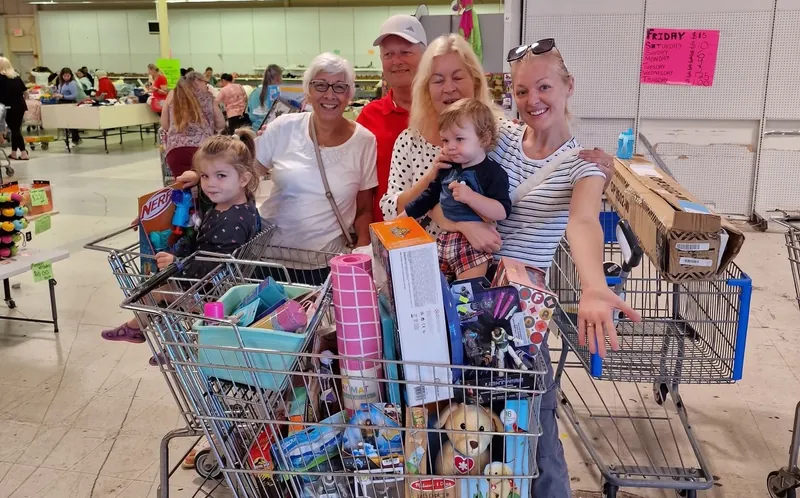
Regular shoppers describe it as a treasure hunt, and that comparison is accurate. Some people visit the same bin store every single week not because they need anything in particular but because the experience itself is enjoyable. There's a social element too; regulars start to recognize each other, share tips about what's been in the bins lately, and build a kind of informal community around the store. That's not something most discount retail formats manage to create.
Pricing cycles add another layer of strategy. Mid-week shoppers get better selection. Weekend shoppers get lower prices. Some people go twice a week and target different points in the cycle. That level of engagement is something traditional retailers spend enormous amounts of money trying to manufacture, and bin stores produce it naturally just by how they operate.
Regular bin store shoppers commonly find: electronics (often fully functional), kitchen appliances, toys and games, clothing and shoes, beauty products, books, tools, home goods, and sporting equipment. Brand names appear regularly because most inventory comes from major retailer returns.
One more benefit worth mentioning: bin stores are usually cash-friendly and quick to shop. No loyalty cards, no complicated return policies to worry about, no upselling. You walk in, you dig, you pay a flat rate per item, and you leave. For people who find traditional retail exhausting, that simplicity is genuinely refreshing.
How to Find and Evaluate a Bin Store Near You
Using Bin Store Pal to find a local bin store, liquidation outlet, or amazon return store is straightforward. Go to the directory, type in your city or region, and see what comes up. If you're in or near Deer River, Minnesota, you already have a highly rated option: Bargain Bin, sitting at a perfect 5.0 stars. Oklahoma City shoppers have a listed option there as well. For everyone else, the directory is actively growing, so checking back periodically is worthwhile as new businesses get added.
When you do find a listing, read it carefully before you make the drive. Look at the hours listed, bin stores often have unusual schedules, sometimes closing early on weekdays or having specific restock days when they're particularly busy. Check the address and make sure you're clear on the location, because some of these places are in industrial areas or strip malls that aren't immediately obvious on the street.
Customer ratings matter a lot here. A 5.0-star average like the one Bin Store Pal currently shows across its listings is a strong indicator, but as the directory grows you'll want to read the actual review text and not just look at the star count. Reviews will tell you things like whether the store is clean and organized, how staff treat customers, whether the inventory is genuinely varied, and whether prices are competitive compared to other bin shops in the area. One detailed review is often worth more than five generic ones.
Something else to ask about or look for: restocking schedules. This is honestly the single most useful piece of operational information you can get about any bin store. Most stores restock on a specific day each week, and prices usually start higher right after restock and drop progressively through the week. If you ask a staff member or check the store's social media (many bin stores post about restocks on Facebook or Instagram), you can plan your visit for maximum value. Going right after a restock gives you the freshest inventory. Going two or three days later means the cream has been skimmed by early shoppers, but prices are lower. Neither approach is wrong; it depends on what you're optimizing for.
Store cleanliness and organization vary more than you'd expect in this industry. Some bin stores are remarkably well-run, with clearly labeled bins, organized product categories, and staff who actively maintain order throughout the day. Others are more chaotic, and while chaos is part of the charm, there's a difference between "treasure hunt messy" and "genuinely difficult to shop." If you visit a store and find it hard to physically move around, items are broken or damaged in ways that weren't obvious from the bin, and staff are hard to find or unhelpful, those are signals to move on to a different location.
Also, and this is something first-timers often don't think about: wear comfortable shoes and bring a bag or small tote if you can. You're going to be standing and bending for a while, and having somewhere to put your finds while you keep digging makes the experience much smoother. Some stores provide handbaskets, but not all of them do.
Check the store's social media presence before you go, if they have one. A bin store or pallet liquidation shop that regularly posts updates, shows off new inventory, and interacts with customers online is usually one that cares about its reputation and is actively managing its business. That's a good sign. Stores that haven't posted in six months might still be operating fine, but it's worth a quick phone call to confirm hours and current status before making the trip.
Before you go: Check the directory listing for hours and ratings. Look up social media for recent activity and restock announcements.
When you arrive: Note cleanliness, organization, and how crowded the bins are. Ask staff about the pricing cycle and restock schedule.
After your visit: Leave a review on Bin Store Pal so other shoppers benefit from your experience.
And yes, leave a review after you visit. Directories like Bin Store Pal only get more useful as more people contribute their experiences. A single honest review from someone who actually visited can make a real difference for the next person trying to decide whether a store is worth their time. That's how directories grow from useful to essential. The Bargain Bin in Deer River is sitting at 5.0 stars right now, and every new genuine review either confirms or challenges that reputation in ways that help future shoppers make better decisions.
Beyond Bin Store Pal itself