How to Prepare for Your First Visit to a Bin Store
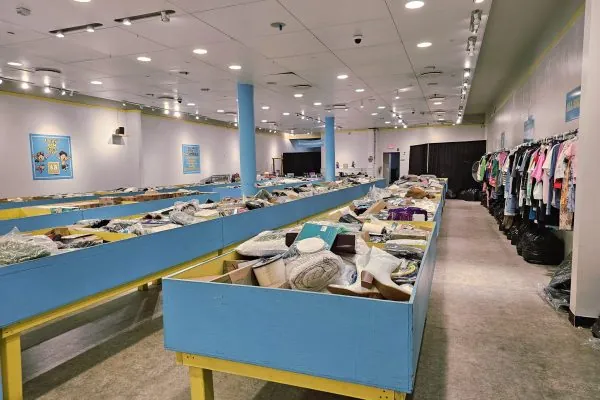
Picture this: you walk into what looks like a giant warehouse, and there are long rows of plastic bins overflowing with stuff. A blender here, a kids' toy there, a brand-new jacket still in its plastic wrap just sitting on top of a pile. You have no idea what you're going to find, and honestly, that's kind of the whole point. Welcome to your first bin store experience.

Bin stores go by a lot of names. You might have heard them called a bargain bin, a liquidation store, a bin outlet, an Amazon return store, or even a return pallet store. Some people search for them as an overstock store or a bin warehouse, and you'll also see the term pallet liquidation thrown around in Facebook groups and YouTube videos. Whatever you call them, they're all basically the same thing: a place where returned, overstock, and unsold merchandise from big retailers gets resold to the public at seriously low prices. And they are growing fast.
Bin Store Pal, a national directory for these kinds of shops, currently lists over 1,260 bin store businesses across the country, with an average customer rating of 4.2 stars. That's not a fluke. People genuinely love these places. But walking in without any preparation is a recipe for feeling overwhelmed, overspending, or missing out on the best stuff. This article covers everything you need to know before your first visit, from how the pricing works to what to wear to how to avoid the most common rookie mistakes.
What Is a Bin Store and How Does It Actually Work?
Here's the basic business model. Large retailers, including e-commerce giants like Amazon, end up with massive amounts of inventory they can't or won't sell at full price. Returns come back damaged, missing parts, or just in messed-up packaging. Overstock items never moved off shelves. Seasonal goods got left over. Rather than sit on all of it, these retailers bundle it into pallets and sell it in bulk to liquidation businesses, usually for pennies on the dollar. Those businesses are your local bin shop.
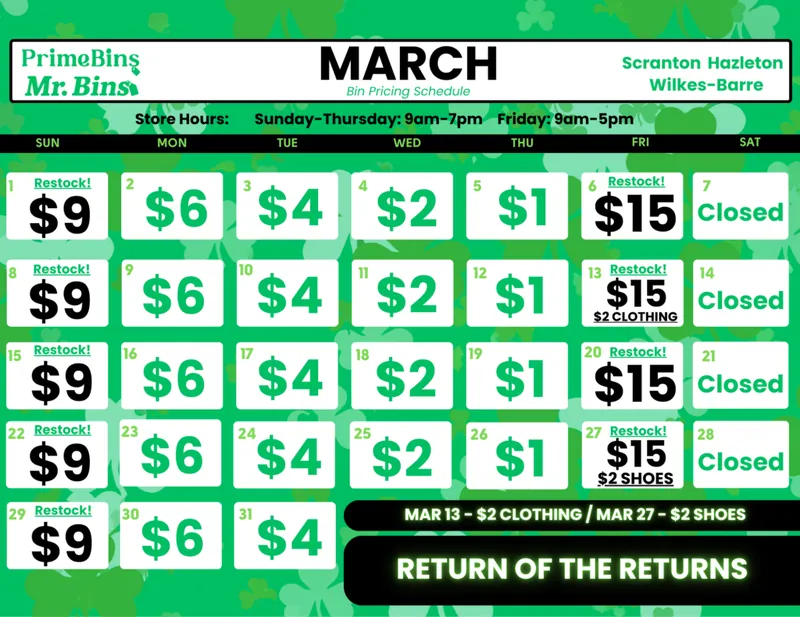
Once the liquidation business gets those pallets, they sort through them, dump the items into big open bins on the sales floor, and let shoppers dig in. No individual price tags on most items. Instead, these stores usually run on a tiered markdown system tied to the day of the week. Monday might be the day fresh inventory drops, and everything costs, say, $10 per item. By Wednesday, that same item might be $5. By Friday or Saturday, it could be $1 or $2. Some stores have a "bag day" or "fill a box" day at the very end of the cycle where you pay a flat rate for whatever you can carry out.
This pricing structure is a big part of the appeal, and it also explains why strategy matters. Arriving on restock day means better selection. Arriving late in the week means lower prices on whatever's left. Neither is wrong; it just depends on what you're after.
Inventory changes completely and constantly. One week you might find a bin full of Instant Pots and Bluetooth speakers. Another week it's mostly clothing and random kitchen gadgets. You genuinely do not know what you're going to see, which is part of why people get hooked. Regulars at a good bin outlet treat it almost like a hobby. They show up every week, they know the restock schedule, and they've got a system.
Most bin stores post their restock days on their Facebook page or Google Business listing. Check before you go. Arriving on day one of a fresh cycle means you're picking through items no one else has touched yet.
The Bin Store Industry by the Numbers
Just to put the growth of this industry into perspective: the Bin Store Pal directory lists 1,260 businesses nationwide, and that number keeps climbing. An average rating of 4.2 stars across that many locations tells you that most of these places are doing something right. Bad experiences exist, sure, but the general trend is strongly positive.
Las Vegas leads the country with 22 bin store listings, which honestly makes sense given the sheer volume of tourists and the retail infrastructure that supports a city that size. New York follows with 17, Phoenix has 14, Colorado Springs has 13, and Honolulu rounds out the top five with 12 listings. What's interesting about that list is Colorado Springs and Honolulu sitting alongside major metros. That signals something real: demand for discount retail isn't just a big-city thing. Mid-sized cities and even island communities are building out their liquidation retail scene at a solid pace.
And some of these stores are genuinely exceptional. Look at the top-rated locations in the directory and you see places like The Other Side Thrift Boutique in Millcreek, Utah, which holds a 5.0-star rating across an almost absurd 5,092 reviews. That's not a fluke or a small sample size. That's a shop with thousands of happy customers. Deals Outlet Bin Store in Tallahassee, Florida has 1,565 reviews at 5.0 stars. Same for their Gainesville, Georgia location with 667 reviews. Bin Fest in Deerfield Beach, Florida holds 382 reviews at a perfect score. These numbers matter because they show what's possible when a bin shop is run well.
Top-Rated Bin Stores in the Bin Store Pal Directory
| Business Name | Location | Rating | Reviews |
|---|---|---|---|
| The Other Side Thrift Boutique | Millcreek, UT | 5.0 ★ | 5,092 |
| Deals Outlet Bin Store | Tallahassee, FL | 5.0 ★ | 1,565 |
| Deals Outlet Bin Store | Gainesville, GA | 5.0 ★ | 667 |
| Bin Fest | Deerfield Beach, FL | 5.0 ★ | 382 |
| The UPS Store | Pasadena, MD | 5.0 ★ | 172 |
What to Bring and How to Dress
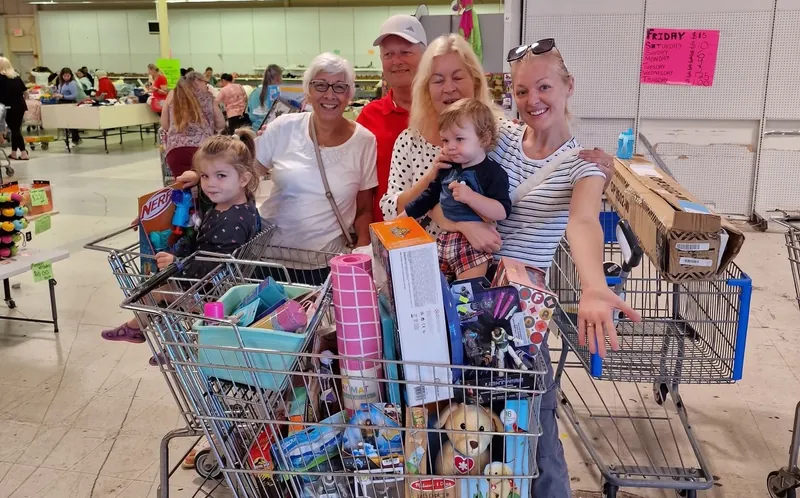
Do not show up empty-handed. Most bin stores do not provide shopping carts or baskets, and you will be hauling stuff around for a while. Bring a laundry basket, a large reusable shopping bag, or even a foldable cart if you're serious about it. Some experienced shoppers bring a small hand cart with bungee cords. That might sound extra for a shopping trip, but once you've tried to carry fifteen items through a crowded aisle with your arms full, you'll wish you had one.
Cash is your friend at a lot of these places. Not all bin stores accept cards, and even the ones that do sometimes have card minimums or spotty internet for their payment terminals. Bring enough cash to cover a reasonable haul, plus a card as backup. A good rule of thumb for first-timers is to set a spending limit before you walk in. It's easy to lose track when everything feels cheap.
Your phone is a legitimate shopping tool here. Keep it charged and ready. You will want to pull up eBay, Amazon, or Google Shopping on the spot to check what items actually sell for. A cordless drill might look like a great deal at $8, but if the model is discontinued and replacement parts don't exist, it's not really a deal at all. Conversely, some random item sitting at the bottom of a bin might be worth $40 retail, and you'd never know without looking it up.
Wear comfortable clothes. Real comfortable clothes, not "I could walk around the mall for an hour" comfortable. Think old jeans, a t-shirt, and closed-toe shoes. You'll be bending, crouching, and reaching into bins for potentially an hour or more. Flip flops are a bad idea. Items fall out of bins constantly and the floors at most of these places are bare concrete. One time I watched someone lose a good find because they were wearing sandals and didn't want to risk digging to the bottom of a bin. Wear the sneakers.
Bringing a second person is genuinely useful, not just more fun. One of you can work one side of the aisle while the other covers the opposite bins. You'll cover twice the ground in the same amount of time, and you'll catch things the other person would have missed.
Smart Shopping Strategies for First-Timers
Arrive early on restock day. This is the single biggest factor in whether you have a great trip or a mediocre one. Bins get picked through fast. Serious shoppers at a popular bin outlet are waiting at the door before it opens. On a fresh restock, you're looking at items that nobody has touched yet. That's where the good electronics, tools, and name-brand clothing tend to live before someone else grabs them.
Inspect everything. Every single item. Most bin stores have a strict no-return policy. All sales are final. That sealed box might have a missing component inside. That jacket might have a broken zipper hidden under the collar. Check seams, test buttons if you can, shake boxes to hear if something sounds wrong inside. Open items carefully and put them back neatly if you're not buying. You're responsible for what you bring to the register.
For electronics specifically, look for power buttons you can test on the spot. Some stores have a plug-in station near the register for testing items before you buy. Not all of them do, but it's worth asking. If a store doesn't allow testing and you're looking at an item over $10 or $15, think hard about whether you're willing to gamble on it. Some things are worth the risk. A $5 set of earbuds? Sure. A $25 air fryer with no way to test it? Maybe not for your first visit.
Resellers who flip items for profit on eBay treat bin stores like a sourcing run. You don't have to be a reseller to think like one. Pull up eBay's "sold listings" filter, not just active listings, to see what things actually sell for versus what sellers are hoping to get. That's the real market value. If you're buying something to use yourself rather than resell, the math is even simpler: is this cheaper than what I'd pay anywhere else for a working version of this thing? If yes, and you can verify it works, buy it.
If the thrill of digging through bins for deep discounts reminds you of bargain hunting in other categories, you might also enjoy checking out salvage grocery options near you, where the same liquidation model applies to food and pantry items at surprisingly low prices.
Bin Store Etiquette and Rules You Should Know
Every bin store has its own posted rules, and you should read them when you walk in. Seriously, they're usually on a sign near the door or the register. Common ones include: no opening sealed packages before purchase, keep bins tidy as you go through them, and on restock days, some stores limit how many of a single item one person can buy. That last rule exists because resellers used to swoop in and clean out an entire category before regular shoppers even had a chance.
Be respectful of the bins themselves. When you dig through a bin, try to put things back roughly as you found them rather than just flipping items onto the floor or piling them into a chaotic heap. Other shoppers are going to dig through the same bin right after you, and nobody wants to sort through a disaster. It takes about two extra seconds to place something back instead of tossing it. Do that.
Don't hoard. This is one of those social things that's not always a written rule but matters a lot. Pulling twenty identical items out of a bin and stacking them in your cart while you decide which ones you want is not cool. Take what you know you're buying. If you find three of something and only want one, put the other two back right away. The bin store community is surprisingly regular and tight-knit. Being known as the person who cleans out shelves and crowds bins will make your visits unpleasant fast.
Personal space matters more at a bin store than almost anywhere else you'll shop. People are shoulder to shoulder, reaching across each other, sometimes competing for the same item. A quick "excuse me" goes a long way. If two people reach for the same thing at the same time, the polite thing is to talk it out, not grab and run. Most shoppers are friendly and pretty easygoing, but the energy in a crowded bin warehouse on restock day can get competitive. Stay calm.
A small thing that trips up a lot of first-timers: some stores have a bin-by-bin pricing system where different sections have different prices, not one flat rate for everything. Pay attention to signage as you move through the store. You might be in a $3 section and wander into a $7 section without noticing. Check the signs on each bin before you assume you know the price.
And one more thing worth saying plainly: be patient at the register. Checkout at a busy bin outlet is slow. Staff are counting items, sometimes weighing bags, and handling a lot of cash transactions. Bring that patience. It's worth it.
Keep bins tidy. Don't hoard multiples while you decide. Give other shoppers their space. Read the posted rules when you walk in. These small habits make the whole experience better for everyone, including you.
Finding a Bin Store Near You
With over 1,260 businesses listed on Bin Store Pal and locations in cities ranging from Las Vegas to Honolulu to Colorado Springs, there's a good chance you have a bin store closer to you than you think. The directory is searchable by city and state, and each listing includes ratings, reviews, and sometimes hours and restock schedule information posted by the business or its customers.
If you're in a smaller city or a rural area and coming up short, check the listings in the nearest metro area. A lot of people make a short drive to a good liquidation store worth the trip, especially if you go with a plan and a clear idea of what you're hoping to find. Some shoppers build it into a regular errand day. Others treat a visit to a well-stocked bin shop as a destination trip once a month. Both approaches work.
Going early in the week on a fresh restock, bringing a basket and cash, wearing your comfortable shoes, and doing a quick price check on anything over $5: that's really the whole formula. In practice, the first visit is a little disorienting. There's a lot to look at, the system feels unfamiliar, and it can be hard to know if you're getting a good deal or just getting swept up in the energy of the place. That feeling passes quickly. Most people who visit a return pallet store once come back again. And again after that.
Frequently Asked Questions
What is the difference between a bin store and a thrift store?
A thrift store typically sells donated items that have been priced individually by staff. A bin store sells returned and overstock merchandise from retailers, usually priced by the day or by a flat rate per item, not individually tagged. Bin stores tend to carry newer products, often still in packaging, while thrift stores skew toward used household goods, clothing, and books.
Are bin store items safe to buy?
Generally yes, but use common sense. Items are customer returns or overstock, so some may have cosmetic damage or missing accessories. Electronics should be tested when possible. Food and personal care items should be checked for expiration dates and intact seals. Most items are perfectly fine; they were returned for reasons that had nothing to do with safety.
Can I return something I buy at a bin store?
Almost certainly not. Most bin stores operate on an all-sales-final policy. This is standard for the industry and is usually posted clearly. Inspect items before you buy. If you cannot verify that something works and you're not willing to accept the risk of it not working, do not buy it.
What day should I visit a bin store for the best selection?
Restock day, which varies by store but is often Monday or Tuesday. Items are fresh, untouched, and priced at the highest tier. If you care more about price than selection, visit later in the week when prices drop significantly on remaining inventory.
Do bin stores sell food?
Some do, some don't. It depends entirely on the specific location and what pallets they receive. If food items are present, always check the expiration date and packaging integrity. If you're specifically looking for discounted grocery and pantry items, you might also want to explore salvage grocery stores in your area, which specialize in that category.
How do I find out when a specific bin store restocks?
Check their Facebook page, Google listing, or just call and ask. Many stores post their restock schedule publicly because they want customers to show up on those days. Some list it directly on their Bin Store Pal profile.
More Ways to Save
Find Bin Store Pal Near You
Browse our directory of 1,260+ businesses across the country, rated and reviewed by real shoppers.
Search the Directory