Everything You Need to Know About Bin Stores, Liquidation Outlets, and Bargain Shopping in America
Picture this: someone walks into what they think is basically a junk store, pokes around for five minutes, decides there's nothing worth buying, and leaves. Meanwhile, the person right behind them walks out forty-five minutes later with a brand-new Instant Pot, two unopened bottles of name-brand skincare, and a kids' toy still in the box, total spent, eleven dollars. Same store. Same day. Same bins. What that first person missed is that shopping at a bin store or liquidation outlet is a skill, not just a hobby, and once you understand how these places actually work, the whole experience changes completely.

This kind of retail has exploded over the last several years. You might have heard people call them bargain bins, bin shops, overstock stores, Amazon return stores, or pallet liquidation outlets. Some people search for a "bin outlet" or a "bin warehouse" depending on what their city calls them. They're all essentially part of the same world, though there are real differences between formats that are worth understanding before you go. This guide covers all of it: how these stores work, how to shop them smarter, what the business side looks like, and how to find a good one near you using the Bin Store Pal directory.
What Are These Stores, Actually? Breaking Down the Different Formats
One of the most confusing things about this retail category is that nobody agrees on what to call it. A liquidation store in one town might look completely different from a liquidation store two hours away. An Amazon return store is technically a type of liquidation outlet, but it's not the same as a traditional overstock store. So let's sort this out.
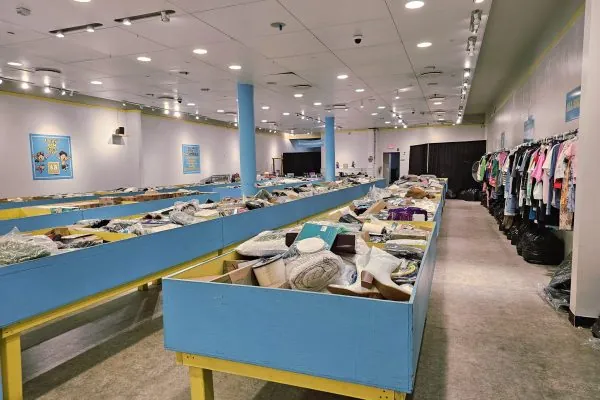
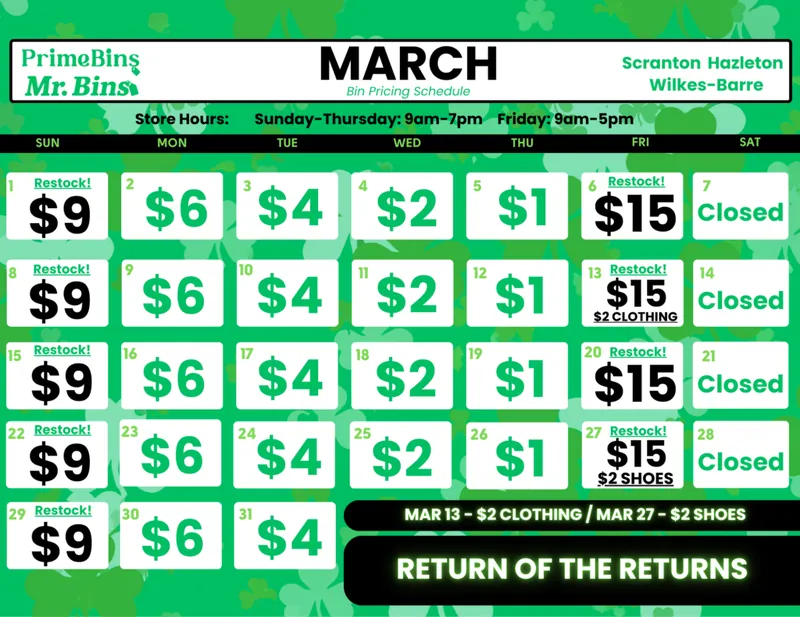
A true bin store (also called a bin shop or bin outlet) operates on a rotating price-drop model. Merchandise gets dumped into large open bins, usually in no particular order, and prices start high at the beginning of the week, then drop every day or two until they hit rock bottom, sometimes as low as twenty-five cents or even a dollar per item regardless of what it is. Then the store restocks and the cycle starts again. This format creates real urgency. People who know about Tuesday's restock show up early. People who want the cheapest prices show up on Saturday. It's genuinely clever, and it keeps customers coming back multiple times a week.
An Amazon return store specifically handles merchandise that was returned to Amazon by customers. These items come in all conditions: some are completely unused and still sealed, some have been opened but work fine, and some are damaged or incomplete. The unpredictability is part of the appeal. You might find a $200 piece of electronics for $15, or you might find a box that's missing half its contents. That's the gamble.
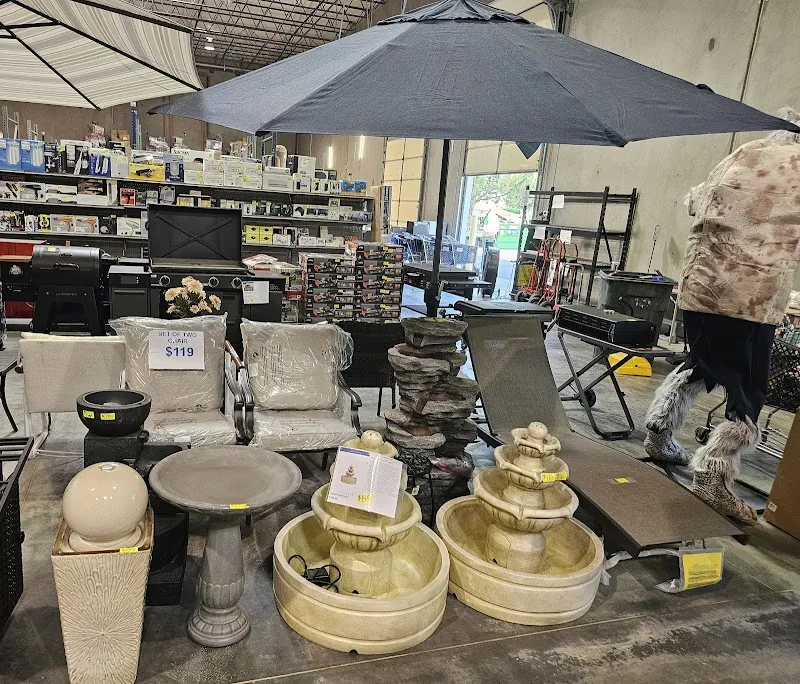
Overstock stores are a little different. These places primarily deal in excess inventory that retailers ordered too much of, seasonal items that didn't sell, or shelf pulls (products that were on store shelves but got replaced by newer models or packaging). Overstock merchandise tends to be in better condition overall because it was never actually sold to a customer and returned. You're not dealing with someone else's used item, you're dealing with a product that just sat in a warehouse too long.

Return pallet stores and pallet liquidation outlets are a slightly different beast. These businesses buy entire pallets of returned or excess merchandise, often from big-box retailers or online platforms, and then either sell items individually or sell the pallets themselves to smaller resellers. Walking into one of these stores, you might see a mix of categories, appliances next to clothing next to auto parts, because the pallets themselves are mixed. Some stores sort things out before putting them on the floor. Others basically just crack open the pallet and let you dig.
A bin warehouse tends to be a larger-format version of a bin shop, sometimes operating out of an industrial space where the bins are longer, the ceilings are higher, and the volume of merchandise is significantly larger. These places often serve both retail shoppers and small resellers who buy in bulk. Parking lots at bin warehouses are usually a sea of pickup trucks and minivans on restock days, which tells you something about the crowd they attract.
Bin Store / Bin Shop / Bin Outlet: Rotating price drops throughout the week, open bins, high shopper engagement.
Amazon Return Store: Specifically handles customer returns from Amazon, mixed conditions, high variability.
Overstock Store: Excess retailer inventory, shelf pulls, generally better condition merchandise.
Return Pallet Store / Pallet Liquidation: Merchandise sourced and sometimes sold by the pallet, mixed categories.
Bin Warehouse: Large-format, high volume, serves both retail and reseller customers.
Understanding which type of store you're walking into matters because it changes your strategy. Knowing what you're dealing with before you walk in saves a lot of frustration.
How to Actually Shop These Places Without Wasting Your Money
First-timers almost always make the same mistake: they go on the wrong day.
At most bin stores that use the weekly price-drop model, restocking typically happens once or twice a week, often on a Tuesday or Wednesday, though this varies by store. Day one prices might be $8 or $10 per item regardless of what it is. By day four or five, that same item might be $1. So when you go depends entirely on what kind of shopper you are. If you want the best selection and you're willing to pay more, go on restock day early. If you want the best prices and you're fine with picking through what's left, go near the end of the cycle. Going on a random Saturday without knowing where the store is in its pricing cycle is a recipe for either overpaying or finding mostly picked-over stuff.
Bring gloves. This sounds overly cautious until you've spent an hour digging through bins and your hands are covered in mystery grease from some product that leaked. A lot of regular bin shoppers also bring a reusable bag or two since many stores don't provide bags or charge for them. And bring your phone for price-checking, this is probably the single most important tool you have. Before you drop $8 on something at a bin shop, spend thirty seconds checking what it sells for on Amazon or eBay. You'd be amazed how often something looks like a steal but is actually selling for $6 new. You'd also be amazed how often something that looks like junk is actually selling for $40 used.
Inspect everything before you put it in your basket. Open boxes when you can. Check electronics for signs of water damage (look for corrosion around ports and battery compartments). Check clothing for stains or tears. For anything that requires batteries or power, ask if the store has a testing station, some do. Do not assume that because something is sealed it's in perfect condition; Amazon returns sometimes get repackaged before being sold, and the repackaging isn't always honest about what's missing.
Set a hard budget before you walk in. Seriously, do this. Bin stores are designed to be fun and stimulating, the treasure hunt feeling is real, and it is deliberately engineered to get you to keep grabbing things. Walk in with $40 in mind and you might walk out having spent $80 without noticing. Experienced shoppers treat it like a game: they set a limit, they stick to it, and they put things back if they go over.
Disposable or reusable gloves. Two or three reusable shopping bags. Your smartphone with Amazon and eBay apps installed. Cash (some smaller stores are cash-only). A rough mental budget you actually intend to keep.
One more thing that catches people off guard: most bin stores and liquidation outlets have a strict no-return policy. Once you buy it, it's yours. This is standard in the industry because the stores themselves bought merchandise without guaranteed quality and they can't absorb returns on top of that. Read the policy posted near the register before you get to the register, not after.
And speaking of things that catch people off guard, if you're curious about stretching your grocery budget the same way you'd stretch your general shopping budget, salvage grocery stores operate on a similar principle of buying excess or near-date inventory at steep discounts, and there's a whole community of shoppers who combine both types of stores in a single shopping trip.
The Business Side: How Bin Stores and Liquidation Outlets Actually Work
Running a bin store is more complicated than it looks from the customer side.
Merchandise sourcing is everything in this business. Stores acquire their inventory through several channels: liquidation auctions (online platforms like B-Stock and Direct Liquidation let businesses bid on pallets from major retailers), direct wholesale relationships with liquidators who have standing contracts with big-box chains, and sometimes direct partnerships with retailers or e-commerce platforms. Amazon, Walmart, Target, and other large retailers generate enormous volumes of returned merchandise every year, and that merchandise has to go somewhere. Much of it flows through a chain of liquidators before ending up at a bin store near you.
The quality of merchandise varies dramatically depending on where in that chain a store is buying. A store that has a direct relationship with a major retailer's returns program is getting first-crack merchandise, which tends to be higher quality. A store buying from a secondary liquidator who already picked through the best stuff is working with a lower-quality mix. This is why two liquidation stores in the same city can feel completely different in terms of what they carry.
Profit margins in this business are genuinely interesting. On paper, buying a pallet of returns for $200 and selling the contents individually for $800 sounds great. But factor in the labor to sort, price, and display everything; the cost of unsellable items (every pallet has some); rent on what is usually a fairly large retail space; and the bins and fixtures themselves, and the margins get tighter. Successful bin stores tend to win on volume and turnover, not on enormous per-item markups. In practice, the weekly price-drop model is specifically designed to guarantee complete inventory turnover, which keeps carrying costs low.
Opening a bin store requires more startup capital than people typically expect. You need a space big enough to hold a meaningful number of bins (smaller operations might have 20-30 bins; larger ones might have 100 or more), the bins themselves which can cost $50-$200 each, initial inventory (a single truckload of mixed returns might run $2,000-$10,000 depending on the source), and the staff to manage restocking and sorting. Location matters enormously. A bin store in a high-traffic area with good visibility and easy parking will outperform an identical store in a hard-to-find location by a wide margin. This is why you see these stores in strip malls and near other discount retailers so often.
Typically, the weekly restock cycle also serves a marketing function that's easy to underestimate. Customers who know a store restocks on Tuesdays will come back every Tuesday. That predictable foot traffic pattern is something most retail formats would kill for. Regular customers often become the store's best advocates, telling friends about their finds and posting on social media, which drives more traffic without the store spending a dollar on advertising.
The Numbers Behind the Industry and What the Bin Store Pal Directory Shows
Recommerce, the broader category that includes resale, liquidation, refurbishment, and discount retail, has grown into a multi-billion dollar market in the United States. Consumers are increasingly comfortable buying returned, refurbished, or excess merchandise, partly for the savings and partly because of a growing awareness that perfectly functional products shouldn't just get thrown away. That cultural shift has been a real tailwind for every format in this space.
Online liquidation auction platforms have grown alongside the physical stores. Some shoppers never set foot in a bin store, they buy pallets online, sort them at home, and resell items on eBay or Facebook Marketplace. But for most people, the in-person experience at a bin shop or liquidation store is a significant part of the appeal. You can't replicate the treasure-hunt feeling of digging through a bin in a warehouse on your phone screen.
Bin Store Pal's directory is still growing, but the early data is telling. Right now there are 2 businesses listed across 2 cities, with an average customer rating of 5.0 stars. That's a perfect score, which honestly says something about the kind of stores that are getting listed and the kind of customers who are motivated enough to leave reviews. People who love their local bin store are enthusiastic about it in a way that's different from how people review a grocery store or a dry cleaner.
One of those listings is Bargain Bin in Deer River, Minnesota, which holds a 5.0-star rating from its reviews. As a rule, the other listing is in Oklahoma City, Oklahoma. And yes, that range from a small town in northern Minnesota to a major metro area in Oklahoma is actually meaningful. It reflects something true about how this retail format has spread across the country. Bin stores aren't just a big-city phenomenon. They work in smaller communities too, sometimes better, because they fill a gap that big-box discount chains can't fill in towns that don't have a Marshalls or a Five Below.
| Business Name | City | State | Rating |
|---|---|---|---|
| Bargain Bin | Deer River | MN | 5.0 ⭐ |
| [Oklahoma City Listing] | Oklahoma City | OK | 5.0 ⭐ |
What's also interesting about a perfect average rating across both listings is that it suggests these stores are genuinely delivering on what they promise. Discount retail can have a reputation problem, people sometimes assume "cheap store" means "bad experience", but a 5.0 average tells a different story. Shoppers who find a good bin outlet or liquidation store tend to become genuinely loyal to it.
How to Find and Evaluate a Good Bin Store Near You
Using the Bin Store Pal directory is straightforward. You can search by city or state to find listed bin stores, liquidation outlets, overstock stores, and related formats in your area. Each listing includes location information, contact details where available, and customer ratings so you can get a sense of what other shoppers have experienced before you make the trip.
But finding a store is just the first step. Evaluating whether a particular liquidation store or bin shop is worth your time takes a little more work, especially if you're visiting for the first time.
Check the store's social media before you go. Most active bin stores post about their restock days, what categories came in on recent pallets, and sometimes photos of interesting finds. This tells you a lot: a store that's regularly posting means they're engaged with their customers and proud of their inventory. A store with a dead Facebook page from 2021 is a yellow flag.
Ask about the sourcing when you're in the store. Good store owners are usually happy to talk about where their merchandise comes from. If they're sourcing directly from major retailer return programs, that's a good sign for merchandise quality. If they're vague or evasive about it, that's worth noting.
Pay attention to how the store is organized. A well-run bin store has bins that are reasonably sorted by category (or at least by restock date), clear pricing signage, and staff who can answer basic questions. A chaotic store where you can't figure out what anything costs or when the price drops happen is frustrating to shop and usually means the operation isn't well managed.
Read the reviews carefully, not just the star rating. A 4.2-star store where reviewers consistently mention great deals on electronics is more useful information than a 4.2-star store where people complain about rude staff but love the prices. Match the review patterns to what you're actually looking for.
One thing worth knowing: smaller bin stores in less competitive markets sometimes have better deals than stores in cities with lots of competing liquidation outlets. In a market with five bin shops competing for the same customers, stores are more aggressive about pricing and more careful about sourcing quality. But in a town like Deer River, Minnesota, where Bargain Bin is the local option, the store has to be genuinely good to earn those five-star reviews without local competition propping it up. That's a different kind of proof.
Word of mouth still works better than any directory for finding the best local spots, honestly. Ask people in local Facebook groups or neighborhood apps whether there's a good bin shop nearby. People who love their local liquidation store will tell you everything you need to know, including which days to go and what to skip.
No visible pricing structure or price-drop schedule posted in the store. Staff who cannot explain how the restock cycle works. Merchandise that looks like it's been sitting in the bins for weeks without turnover. No return or exchange policy posted anywhere. Bins that smell strongly of mold or chemical damage, this sometimes indicates merchandise that was stored poorly and could mean electronics or fabric items are compromised.
And if you find a bin store you love, leave a review. For small operations like the ones listed in Bin Store Pal's directory, reviews genuinely matter. A few honest reviews can make a real difference in helping other shoppers in the community find these places.
Frequently Asked Questions
What is the difference between a bin store and a liquidation store?
A bin store is a specific format where merchandise is placed in large open bins and prices drop on a set schedule throughout the week. A liquidation store is a broader term for any store that sells returned, excess, or over