Bin Shops vs. Traditional Retail: An Honest, No-Nonsense Comparison
More Than 1,260 Bin Stores Are Now Listed in One Directory, and That Number Keeps Climbing
Over 1,260 bin shop businesses are currently listed on Bin Store Pal, averaging a customer rating of 4.2 stars across the board. That is not a niche novelty number. That is a real industry with real foot traffic, real fans, and real money changing hands every single day. Bin stores, also called bargain bin shops, liquidation stores, overstock stores, Amazon return stores, return pallet stores, bin outlets, and bin warehouses, have quietly built a loyal following that traditional retailers are starting to notice. This article breaks down both formats honestly: what you actually get, what you give up, and which one makes more sense depending on what you are trying to do.
Nobody is here to hype bin stores or trash traditional retail. Both formats serve real purposes. But if you have never stepped inside a bin outlet before, or if you are an entrepreneur trying to figure out where to source product cheaply, you need a clear-eyed look at both options before you spend a dollar.
What Bin Shops Actually Are and How They Work
Here is what most people get wrong about bin stores: they think it is just a glorified garage sale. It is not. A bin shop sources its inventory through a specific supply chain, one that runs parallel to traditional retail and feeds off its excess. Major retailers like Amazon, Walmart, and Target generate enormous volumes of returned merchandise, overstock items, and shelf-pull products every single year. That merchandise gets sold off in bulk to liquidators, who then resell it to bin store operators in the form of pallets, sometimes called return pallets or pallet liquidation lots.
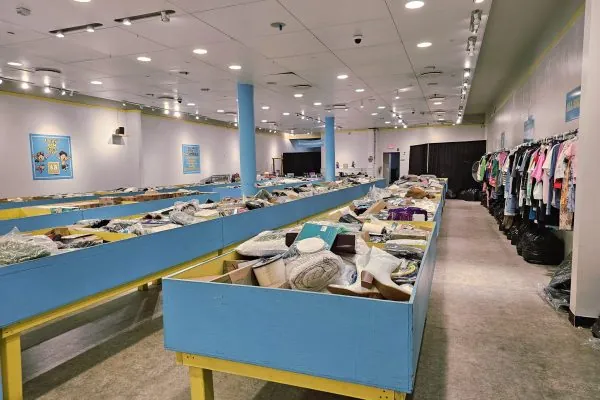
Walking into one of these stores for the first time is a genuinely weird experience, in the best possible way. Picture rows of open plastic bins, maybe waist-high, stuffed with a completely random mix of products. Kitchen gadgets next to phone cases next to kids' toys next to brand-name sneakers. No labels on the shelves telling you what category you are in. No tidy end-cap displays. Just stuff, a lot of it, and the implicit challenge: find something good.
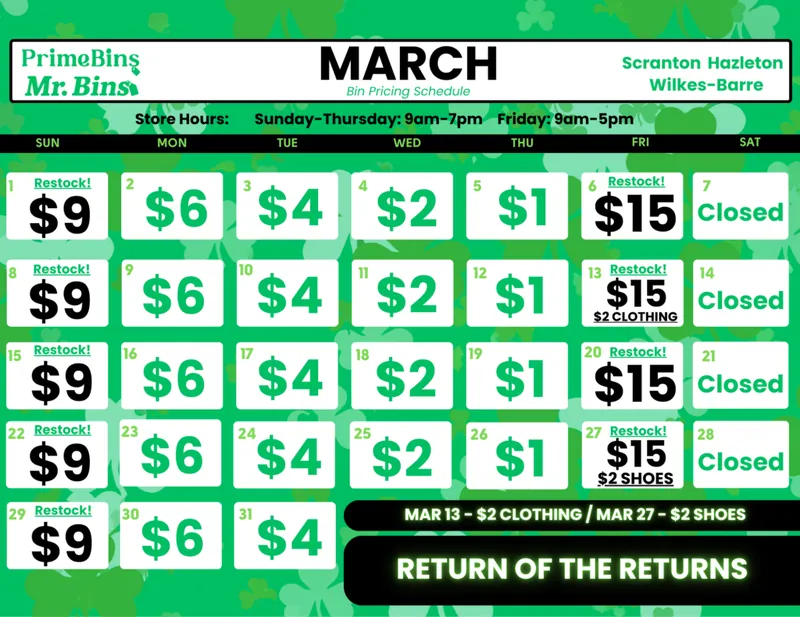
Pricing at most bin stores follows a weekly markdown cycle. A typical structure starts items at around $7 to $10 on the first day of the week and drops the price by a dollar or two each day until everything left hits $1 or less before the bins get cleared out and restocked. Some stores start even higher, around $12 to $15 for fresh bins, especially if they're known to carry higher-end electronics or brand-name apparel regularly. The cycle resets and the whole treasure hunt starts over again.
Smart shoppers learn to time their visits. Go early in the week for the best selection. Go late in the week for the lowest prices on whatever is left. It sounds simple, and it is, but most people do not think about it strategically until someone tells them.
Bring a tote bag or a small box. Most bin stores don't provide shopping carts, and you'll be holding items for a while as you sort through bins. Also check the store's restock day, usually posted on their door or social media, because that's when the best stuff comes out.
What Traditional Retail Looks Like by Comparison
Traditional retail is what most people grew up with. Big-box stores like Target or Home Depot. Department stores like Macy's or Kohl's. Specialty retailers like Best Buy or REI. Online marketplaces with fixed pricing and guaranteed fulfillment. All of these share a common model: buy product from manufacturers or wholesalers at a negotiated price, mark it up at a standard margin, display it neatly, and sell it with a clear return policy.
Consistency is the whole value proposition of traditional retail. You walk in knowing what the store sells, roughly what things cost, and exactly what happens if something breaks or does not fit. Manufacturer warranties apply. Customer service desks exist for a reason. Loyalty programs reward repeat spending. If you buy a blender at Bed Bath & Beyond and it stops working in three months, you have options. Real, enforceable options.
That predictability costs money, though. Traditional retailers carry significant overhead: rent on large, well-lit spaces, trained staff, organized stockrooms, and logistics systems that keep shelves consistently stocked. Those costs get built into the price you pay at the register. A product that costs a manufacturer $8 to make might wholesale for $16 and retail for $35. That is not exploitation, it is math. But it means shoppers are always covering someone else's operating costs in addition to the product itself.
And here is something nobody really talks about enough: traditional retail generates an enormous amount of waste on its own. Unsold inventory, seasonal items that do not move, products that get returned but cannot be reshelved, all of it has to go somewhere. A lot of it goes to landfills. Some of it ends up in bin stores, which is actually the better outcome environmentally.
The Real Pros and Cons of Bin Shops
What Makes Them Worth Your Time
Price. Full stop. Shoppers at bin stores routinely find items at 50 to 90 percent below original retail value. A $60 Bluetooth speaker for $4. A $45 set of kitchen knives for $7. Brand-name clothing with tags still attached for $2 on a late-week clearance day. These are not hypothetical examples, they happen constantly at well-stocked liquidation stores with good sourcing.
For resellers, the math gets even more interesting. Someone buying items at $1 to $3 each during late-week clearance can often flip those items on eBay, Facebook Marketplace, or at flea markets for $10 to $30 each. That kind of margin does not exist in traditional wholesale. This is why bin stores have developed such a devoted following among small-scale entrepreneurs, side-hustle operators, and people who are genuinely good at spotting value.
Beyond price, there is an environmental angle that actually matters. Bin stores divert returned and excess goods from landfills. Every item sold through a bin outlet or overstock store is one less item sitting in a destruction pile somewhere. Budget-conscious shoppers and sustainability-minded consumers often end up at the same place for completely different reasons, and bin shops serve both groups well. If you are also interested in reducing food waste in your shopping habits, checking out salvage grocery options in your area is a natural extension of that same mindset.
The excitement factor is real too. Shopping at a bin warehouse feels nothing like pushing a cart through Target. You are genuinely hunting. Some people hate that. Others are completely addicted to it.
What You Are Giving Up
Let's be blunt. Bin stores are not for everyone, and pretending otherwise is dishonest.
Inventory is completely unpredictable. You cannot go to a bin shop expecting to find a specific item. You might find ten of them or none at all. If you need a particular product on a particular day, traditional retail is your only real option. A return pallet store is not a place you visit with a shopping list.
Product condition varies enormously. Some items are brand new in sealed packaging. Others are customer returns that may be missing accessories, have cosmetic damage, or have stopped working for reasons nobody documented. Most bin stores do not offer any return policy at all, which is completely reasonable given how they source, but it does mean you're buying as-is every single time. If you buy a broken item for $5 and it does not work, that $5 is gone. Most people can absorb that. But if you spend $8 on something expecting it to work and it does not, that sting is real.
Time is also a real cost. Sorting through bins takes effort. Some stores are well-organized and well-lit with bins that make it easy to see what is there. Others are cramped, loud, and chaotic, especially on restock day when half the city shows up at once. I have been in bin warehouses where the parking lot alone was a 10-minute ordeal on a Tuesday morning. Worth it? Often yes. But you should know what you are walking into.
Before buying electronics or anything with moving parts, look for physical damage, check if it powers on (some stores have outlets available), and always ask if the store has a same-day return or exchange policy for non-working items. Some do, even if it's unofficial. Doesn't hurt to ask.
The Real Pros and Cons of Traditional Retail
What It Gets Right
Reliability. That is the core promise of traditional retail, and it delivers on that promise consistently. You know what you're getting, you know what it costs, and you know what happens if something goes wrong. Manufacturer warranties, clear return windows, trained staff who can answer questions, all of it adds up to a shopping experience that is genuinely low-stress. For big purchases, especially electronics, appliances, or anything safety-related, traditional retail is the correct choice almost every time.
Loyalty programs are genuinely underrated as a savings tool. Many shoppers at traditional retailers stack coupons, cash-back apps, and store points to bring prices down closer to what they'd pay at a discount outlet. It takes more planning, but the results can be real. Add in the ability to comparison shop across multiple retailers with confidence in product authenticity, and you've got a system that rewards organized, patient shoppers.
Customer service matters more than people admit until they need it. Having a human being accountable for a transaction, someone you can call or walk back in to see, is valuable. Traditional retail provides that. Bin stores usually do not.
Where It Falls Short
Price is the obvious one. Paying full retail when you know the exact same product is sitting in a bin somewhere for $3 is genuinely painful once you have experienced the alternative. Traditional retail margins are real and significant, and consumers absorb all of them.
There is also a real environmental cost to the traditional retail model that does not get enough attention. Overproduction, excess seasonal inventory, and the scale of product destruction at major retailers all contribute to waste that is hard to fully quantify but is definitely large. Shoppers who care about this stuff are increasingly aware of it, and it is one of the reasons bin stores are growing.
For resellers and small business buyers, traditional retail is essentially useless as a sourcing channel. Margins are too thin or completely nonexistent. You cannot buy a product at retail and resell it at a profit in most categories. Bin stores and pallet liquidation sourcing exist specifically to fill that gap.
The Numbers Behind the Bin Store Industry
Bin Store Pal's directory data tells a story worth paying attention to. With over 1,260 bin shop businesses listed and an average rating of 4.2 stars, this is not a fringe trend. Consumers are showing up, spending money, and leaving satisfied at a rate that would make many traditional retailers jealous.
Geographically, the spread is interesting. Las Vegas leads with 22 listings, followed by New York with 17, Phoenix with 14, Colorado Springs with 13, and Honolulu with 12. That last one surprises people. Honolulu, an island city with high shipping costs and a smaller population than most major metros, has 12 bin store listings. That says something real about how broadly this model has taken hold.
Some individual stores have built extraordinary reputations within the format. Check out the top performers:
| Business Name | Location | Rating | Reviews |
|---|---|---|---|
| The Other Side Thrift Boutique | Millcreek, UT | 5.0 ★ | 5,092 |
| Deals Outlet Bin Store | Tallahassee, FL | 5.0 ★ | 1,565 |
| Deals Outlet Bin Store | Gainesville, GA | 5.0 ★ | 667 |
| Bin Fest | Deerfield Beach, FL | 5.0 ★ | 382 |
| The UPS Store | Pasadena, MD | 5.0 ★ | 172 |
The Other Side Thrift Boutique in Millcreek, Utah has 5,092 reviews and a perfect 5.0 rating. That is not luck. That is a store that has built genuine trust with a large, repeat customer base over time. And that kind of social proof, at scale, is something most traditional retailers would spend millions in marketing to achieve.
Broadly, the U.S. liquidation and returns market has grown significantly as e-commerce expands, because more online purchases means more returns, and more returns means more inventory flowing into the bin store supply chain. Some estimates put the annual value of returned merchandise in the U.S. at over $800 billion. Even a fraction of that feeding into bin stores and pallet liquidation channels is enough to sustain thousands of small businesses nationwide.
Startup costs are relatively low compared to most retail formats. You need a space, bins, and a reliable liquidation pallet supplier. No need for custom fixtures, elaborate displays, or a deep brand identity on day one. Many owners launch their first bin outlet for under $15,000 total. In practice, the hard part is sourcing quality pallets consistently, not the store setup itself.
So Which One Should You Actually Choose?
Both formats will continue to exist because they serve genuinely different needs. Trying to replace one with the other makes no sense.
Bin stores win on price, entertainment value, environmental impact, and sourcing opportunities for resellers. Traditional retail wins on reliability, product consistency, warranties, and the ability to shop for something specific. Those are not competing strengths so much as completely different use cases.
If you are shopping for something you need to work correctly and you need it today, go to a traditional retailer. If you are shopping for fun, for value, for resale, or just to see what the universe has decided to send your way this week, a bin shop is the better bet. I would pick a bin store over a big-box retailer for any non-essential purchase almost every time, because the savings are real and the experience is genuinely more interesting.
But do not walk into a bin outlet expecting it to be something it is not. It is a treasure hunt, not a shopping trip. Adjust your expectations accordingly and you'll probably love it.
Frequently Asked Questions
What is a bin shop and how is it different from a thrift store?
A bin shop, also called a bargain bin, bin outlet, or liquidation store, sources its inventory from Amazon returns, retailer overstock, and pallet liquidation lots. Thrift stores typically source from individual donations. Bin stores tend to have more new or like-new merchandise, while thrift stores skew toward used goods. Pricing structures are also different; bin stores usually use a weekly markdown cycle, while thrift stores set individual prices per item.
Can I return something I bought at a bin store?
Most bin stores have a no-return policy, and that is standard for the format. You are buying as-is merchandise that the store itself bought without guarantees. Some stores will exchange non-working electronics on the same day if you can show it was broken in the bin, but do not count on it. Ask before you buy anything expensive.