7 Psychological Reasons You Can't Stop Shopping at Bin Stores (And Why That's Totally Fine)
Most people assume bargain bin shopping is about being broke. That is completely wrong. Research into consumer behavior keeps showing that some of the most enthusiastic bin store regulars are middle-income shoppers who could easily afford to pay full retail price. They are not there because they have to be. They are there because something about digging through a pile of mystery merchandise and pulling out a $90 Instant Pot for $8 hits different than any normal shopping trip ever could.
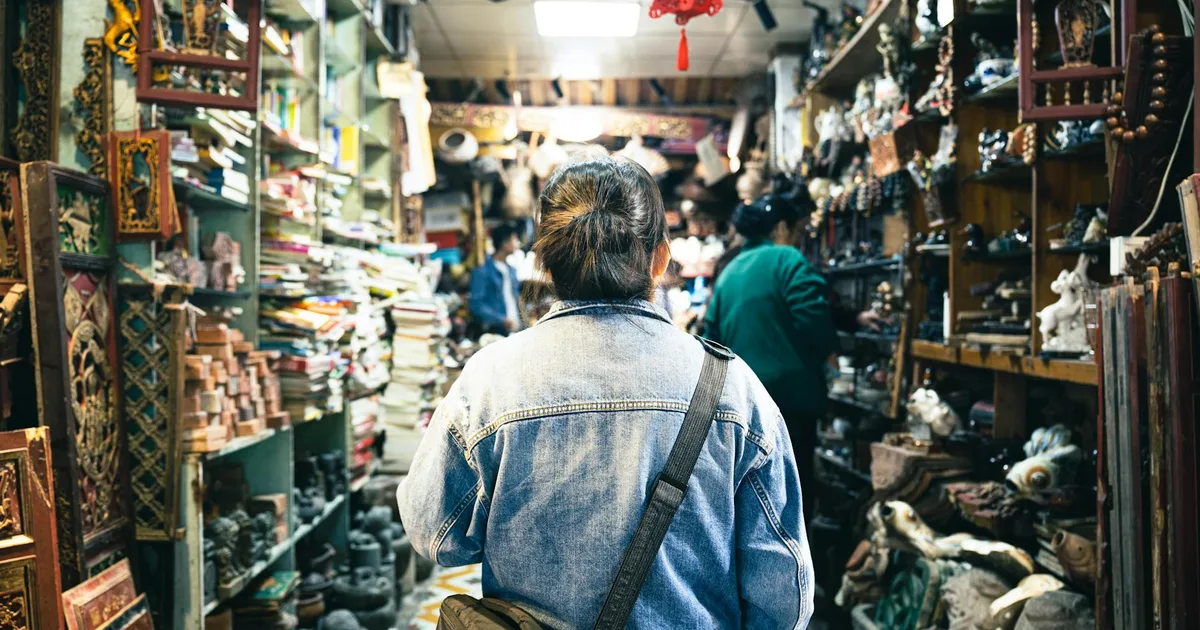
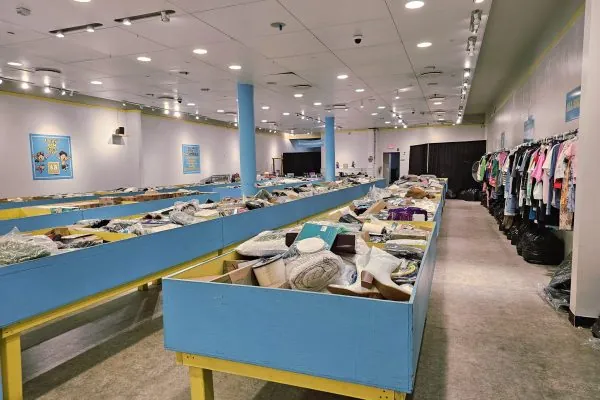
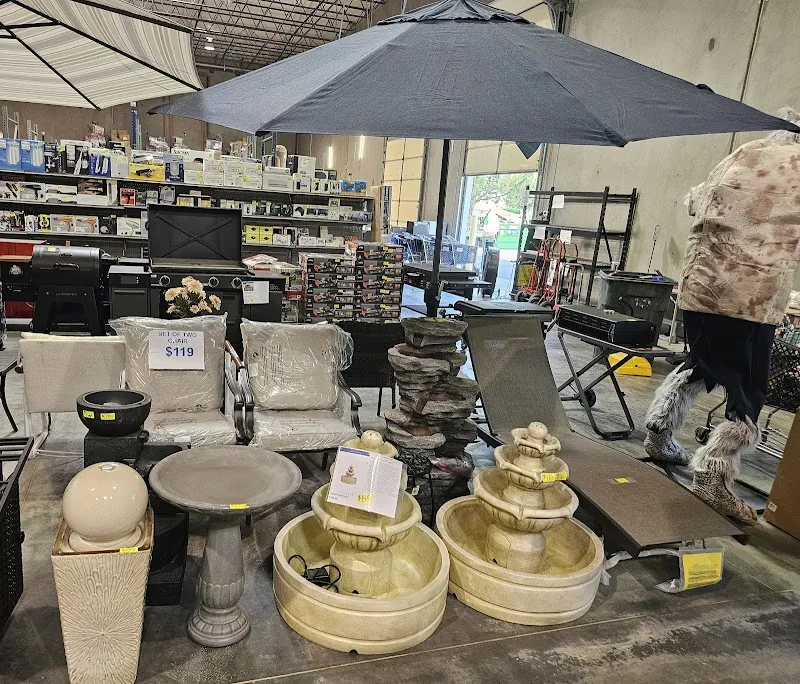
Bin stores, liquidation stores, overstock stores, amazon return stores, return pallet stores, pallet liquidation outlets, bin outlets, bin warehouses, whatever you want to call them, they have exploded in popularity over the last several years. And the reason is not just that prices are low. It is that these places are psychologically engineered (accidentally, mostly) to be addictive in a way that a normal Target run simply is not. Our directory at Bin Store Pal currently lists 1,252 businesses across the country, with an average customer rating of 4.2 stars out of 5. That kind of satisfaction rating, across that many locations, is not a coincidence.
So here are 7 things actually driving your love of bargain bin shopping, explained plainly and without the retail industry jargon.
1. Your Brain Treats Every Bin Like a Slot Machine
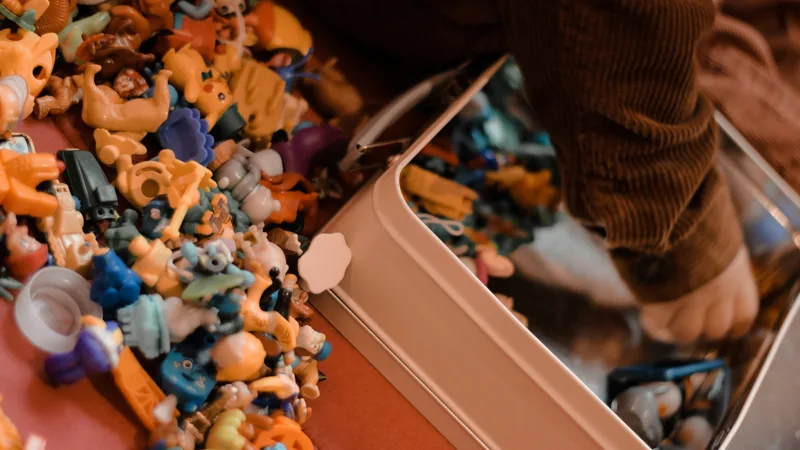
This is the big one, and most people have no idea it's happening. Variable reward psychology is the same mechanism that makes slot machines so compelling, you do not know what you are going to get, and that unpredictability is more stimulating than a guaranteed outcome would ever be. Walking into a bin shop and not knowing whether today's dig will turn up a broken umbrella or a brand-new KitchenAid stand mixer is functionally the same neurological experience as pulling a lever in a casino.
Dopamine does not just get released when you find something good. It gets released in anticipation of the possibility. Every bin you haven't looked through yet is a potential jackpot. That is why shoppers often describe bin store visits as exciting even on days when they buy nothing. The searching itself is the reward loop, not just the buying.
Inventory at these places comes from overstock merchandise, Amazon returns, and return pallets bought wholesale by the store owner. Because the product mix changes constantly and unpredictably, there is no way to know what will be on the floor from visit to visit. Some bin outlets restock weekly. Others bring in new pallets every few days. That randomness is not a bug in the shopping experience. It is the entire point.
2. Tiered Pricing Creates a Deadline You Can Feel
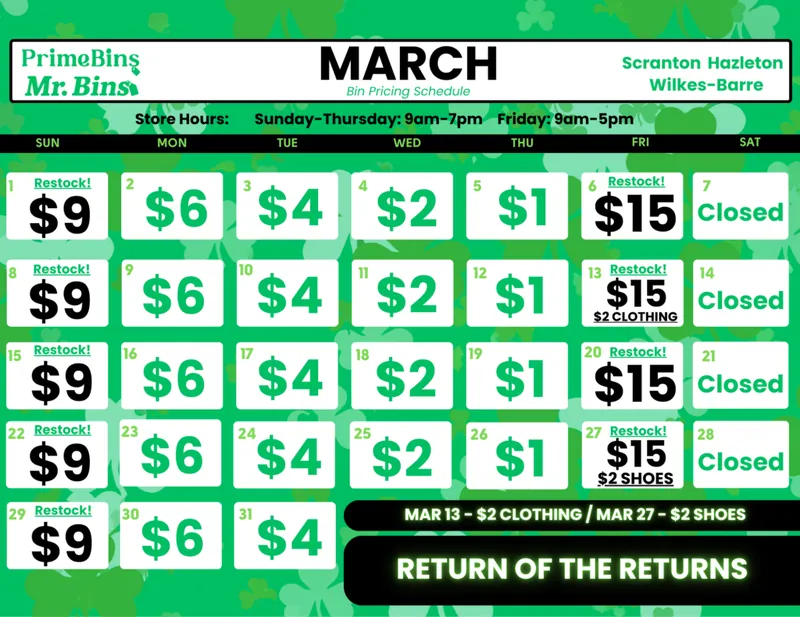
Most bin stores run a pricing schedule that drops prices as the week goes on. Day one after a restock might be $8 per item. By day four, everything left is $2. By day six, it might be a bag sale or a dollar a pound.
OK so here is the part that messes with your head, you are not just shopping. You are racing a clock you cannot fully see.
If you go on day one, you get first pick but pay higher prices. Wait until day four, and prices are lower but the good stuff is gone. This creates a genuine tension that most retail shopping never produces. Psychologists call this loss aversion, and it is one of the most powerful motivators in human decision-making. Losing access to something feels worse than gaining the equivalent thing feels good. At a liquidation store, every day you wait is a day closer to losing the item forever, because these stores do not restock the same products twice.
Experienced shoppers figure out their local store's schedule and plan visits around it. Going on restock day if you want selection, going on day three or four if you want rock-bottom prices on whatever is left. It's a strategy game, and the strategy makes people feel smart. More on that in a second.
Ask your local bin store what day they restock and what their weekly pricing schedule looks like. Most will tell you straight up. Knowing whether you are on day two or day five of a pricing cycle changes everything about how you shop.
3. Finding a Deal Makes You Feel Smart, Not Just Lucky
There is a specific pride that comes from pulling a $120 Dyson cordless vacuum out of a bin and paying $14 for it. It is not just happiness about saving money. It is a feeling of having beaten the system, of having knowledge and timing that other people did not have. Psychologists sometimes call this "smart shopper" self-perception, and it feeds into positive self-image in a real way.
This is part of why bin store shoppers talk about their finds so much. It is not bragging about the item exactly. It is bragging about the skill involved in finding it. The story matters as much as the product.
Overstock stores and return pallet stores give shoppers a version of retail therapy that also feels virtuous and clever rather than indulgent. You are not spending money recklessly, you are being strategic. Your brain gives you credit for both the find and the frugality at the same time, which is a double hit of positive reinforcement that regular retail shopping simply does not offer.
4. Social Media Turned Bin Shopping Into a Sport
Haul videos. That's the thing nobody talks about when they explain the growth of bin culture. A huge portion of the audience that found their way into liquidation stores in the last four or five years got there because they watched someone on TikTok or YouTube pull ridiculous finds out of a bin and load up a cart for under $50 total.
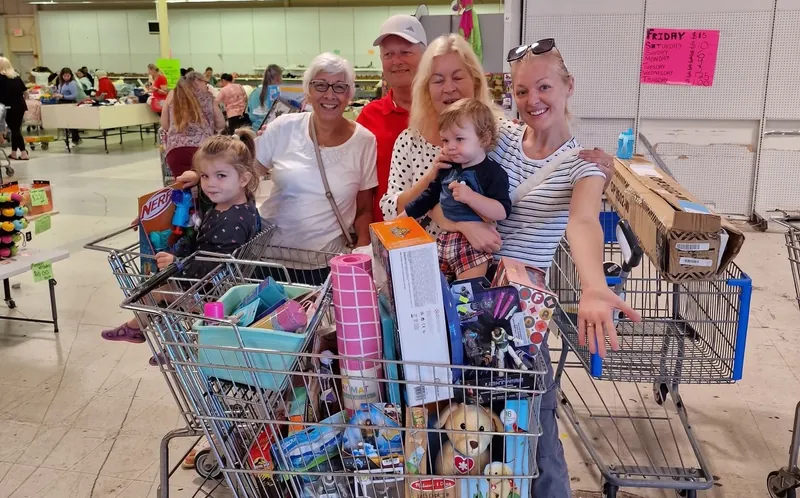
Sharing a bin store haul on social media gets engagement in a way that posting about a normal Target trip does not. People react to the surprise, the variety, the "wait how much did you pay for that" moment. It turns a solo shopping trip into content, into conversation, into community. Some creators have built genuinely big followings just by documenting their weekly bin shop visits.
And this feeds back into foot traffic at the stores themselves. Communities form around local bin outlets, with regulars who recognize each other and share tips about restock days. Online groups dedicated to specific stores pop up. In practice, the social layer on top of the shopping experience is part of what makes these places feel different from a regular discount retailer.
If you're into finding deals across different categories, it's worth knowing that the same value-hunting mindset applies to grocery shopping too. Salvage grocery stores work on a similar model, short-dated or overstock food products sold at steep discounts, with inventory that changes constantly. Same treasure hunt psychology, different product category.
5. Bin Shopping Feels Environmentally Responsible
Here is something the industry does not market loudly enough: buying from a bin store or an amazon return store is actually one of the more sustainable shopping choices you can make. Products that would otherwise get thrown away or destroyed (yes, some major retailers do that) are getting a second shot at use. Return pallets and overstock merchandise that goes through liquidation channels stays out of landfills.
For a certain segment of shoppers, this matters a lot. Not in a performative way, genuinely, knowing that their purchase is recovering value from a product that would otherwise be wasted adds a layer of meaning to the transaction. It is not just a deal. It is a responsible choice.
This is especially relevant to younger shoppers who are generally more tuned into supply chain and waste issues. Bin store culture and thrift store culture overlap significantly in this demographic, even though the product types are very different. Typically, the ethical angle is real and it drives loyalty.
Not everything in a bin store is in perfect condition. Some items are returns because they're broken, missing parts, or just not what the buyer wanted. Go in knowing that and you will never be disappointed. Check electronics before you buy if you can, and ask if the store has a return policy on damaged items (some do, some don't).
6. It Crosses Every Income Bracket
Bin stores are not poor people stores. I want to say that clearly because the stigma is real and it is wrong.
Bin Store Pal has 1,252 listed businesses across the country, and the top cities by listing count tell an interesting story: Las Vegas leads with 22 listings, then New York with 17, Phoenix with 14, Colorado Springs with 13, and Honolulu with 12. Honolulu. One of the most expensive cities in the country has 12 listed bin store locations. Las Vegas, which draws visitors across every income level, leads the whole country.
This distribution is not what you would expect if these stores only served low-income communities. They are showing up in high-cost markets, in resort cities, in places where people have disposable income and choices. As a rule, the sport of finding deals appeals across demographics. Some shoppers are stretching a tight budget. Others are just in it for the hunt, and they have been grocery shopping at Whole Foods an hour earlier. Both groups are at the same bin on the same Tuesday afternoon, and they are having the same amount of fun.
That average 4.2 star rating across 1,252 businesses also suggests that customer satisfaction is high and fairly consistent. These are not desperate-last-resort shops. People leave happy.
7. The Best Stores Have Earned Real Trust
Some bin stores have built genuinely impressive reputations. Looking at the top-rated businesses in our directory, a few patterns stand out.
| Business Name | Location | Rating | Reviews |
|---|---|---|---|
| The Other Side Thrift Boutique | Millcreek, UT | 5.0 ★ | 5,092 |
| Deals Outlet Bin Store | Tallahassee, FL | 5.0 ★ | 1,565 |
| Deals Outlet Bin Store | Gainesville, GA | 5.0 ★ | 662 |
| Bin Fest | Deerfield Beach, FL | 5.0 ★ | 382 |
| The UPS Store | Pasadena, MD | 5.0 ★ | 172 |
The Other Side Thrift Boutique in Millcreek, Utah has over 5,000 reviews at a perfect 5.0 rating. That is not luck. That is a store that has figured out what its customers want and delivers it consistently, visit after visit. Five thousand people took the time to leave a review. That number alone should tell you something about how much people care about their bin store experiences.
Deals Outlet Bin Store appears twice on the top-rated list, in Tallahassee and in Gainesville, both at 5.0 stars. Wait, actually, Gainesville here is Gainesville, Georgia, not Florida, worth noting because they are two different cities, two different stores, same name, same perfect score. That kind of consistency across locations suggests the operation has a real system going.
Stores like these earn loyalty because they treat the shopping experience as something worth caring about: clean floors, organized bins, friendly staff, consistent pricing. Parking at a lot of these places is also just... weirdly decent, which sounds minor but matters when you're hauling out a cart of random stuff. Good bin stores feel like the kind of place you want to tell your friends about. Bad ones feel like a yard sale that got out of hand.
When you find a good one, go back. Regulars always get more out of these places than one-time visitors do.
How to Actually Get the Most Out of a Bin Store Visit
A few practical things, short and direct:
- Know the pricing schedule before you go. Call ahead or check the store's social media. Day one versus day four is a completely different experience in terms of both price and selection.
- Do not go with a specific item in mind. You will be disappointed. Go with a budget and an open mind. That is the whole thing.
- Bring a reusable bag or a laundry basket. Some stores charge for bags. More importantly, you will want both hands free to dig.
- Check for damage before buying electronics or anything with moving parts. Most bin stores do not accept returns, or have very limited return windows.
- Go on a weekday if you can. Weekends at a popular liquidation store or bin warehouse can get chaotic. For most shoppers, the good stuff goes fast and the crowds are real.
- Use Bin Store Pal to find stores near you and check ratings before driving across town. A 4.8-star store with 400 reviews is almost always worth the trip. A 3.1-star store with 12 reviews might be fine, but go in with lower expectations.
If you're new to bin stores and want a lower-stakes introduction to value shopping, salvage grocery stores follow a similar model for food and household goods. Browse salvage grocery options in your area to get comfortable with the overstock shopping format before you commit to the full bin store experience.
The Bottom Line
Bargain bin shopping is not about being cheap. It never really was. It is about the hunt, the score, the story, and increasingly, the community that has built up around it. Variable rewards, loss aversion, smart-shopper pride, social sharing, sustainability, and cross-demographic appeal, all of it stacks on top of each other to create a retail experience that regular stores genuinely cannot replicate.
There are 1,252 bin stores, liquidation stores, overstock stores, and return pallet stores listed in our directory right now, averaging 4.2 stars across the board. That is a lot of happy shoppers finding a lot of unexpected things. Find one near you, learn the restock schedule, and go in ready to be surprised.
You will come back.
What is a bin store exactly?
A bin store (also called a bin shop, bin outlet, or bin warehouse) is a retail store that sells overstock merchandise, Amazon returns, and return pallets sorted into open bins. Prices are typically set by day of the week, dropping as the week progresses. Inventory changes constantly because it comes from irregular wholesale sources.
Are bin store items always used or damaged?
Not always. Many items in bin stores are brand new, never opened, and in perfect condition. They end up in liquidation channels because they were overstocked by a retailer, returned by an Amazon customer without being used, or pulled from shelves for reasons unrelated to their condition. That said, some items are damaged or incomplete, so checking before you buy is smart.
How do I find a good bin store near me?
Bin Store Pal lists over 1,252 bin stores, liquidation stores, and pallet liquidation outlets across the country. You can search by city and filter by rating. Top cities for bin store concentration include Las Vegas, New York, Phoenix, Colorado Springs, and Honolulu.
What is the best day to visit a bin store?
It depends on what you want. Go on restock day for the best selection, even if prices are higher. Go toward the end of the pricing cycle (usually day 3-5) for the lowest prices on whatever remains. Calling ahead to ask about the schedule is the single most useful thing a new bin store shopper can do.
Is bin store shopping environmentally friendly?
Yes, genuinely. Buying from an amazon return store or pallet liquidation outlet means those goods stay in use instead of being destroyed or sent to a landfill. Major retailers sometimes destroy unsold or returned merchandise rather than deal with it. Liquidation channels keep that from happening.
More Ways to Save
Find Bin Stores Near You
Browse our directory of 1,252+ bin stores, liquidation stores, overstock stores, and return pallet stores across the country. Rated by real customers, updated regularly.
Search the Directory